DQ3 英語学習ノート — ジパング編(オロチ討伐)
素材: Switch版『ドラゴンクエストIII HD-2D』英語版スクリーンショット33枚 レベル設定: 上級(要点のみ) — 難単語・イディオム・古風/詩的表現にしぼって解説 ※ DQの英語版は中世風・聖書風の格調高い文体(archaic register)が特徴。日常英語とは語順・語彙が異なる点に注意。
読み方: 各シーンは ①原文(古語・詩的)→ ②🗣️現代英語(plain modern English)→ ③対訳(日本語) の3段構成。①と②を見比べると「古語が現代英語ではどう言い換わるか」が分かる。
Scene 1 — 卑弥呼の謁見(正体露見)
01
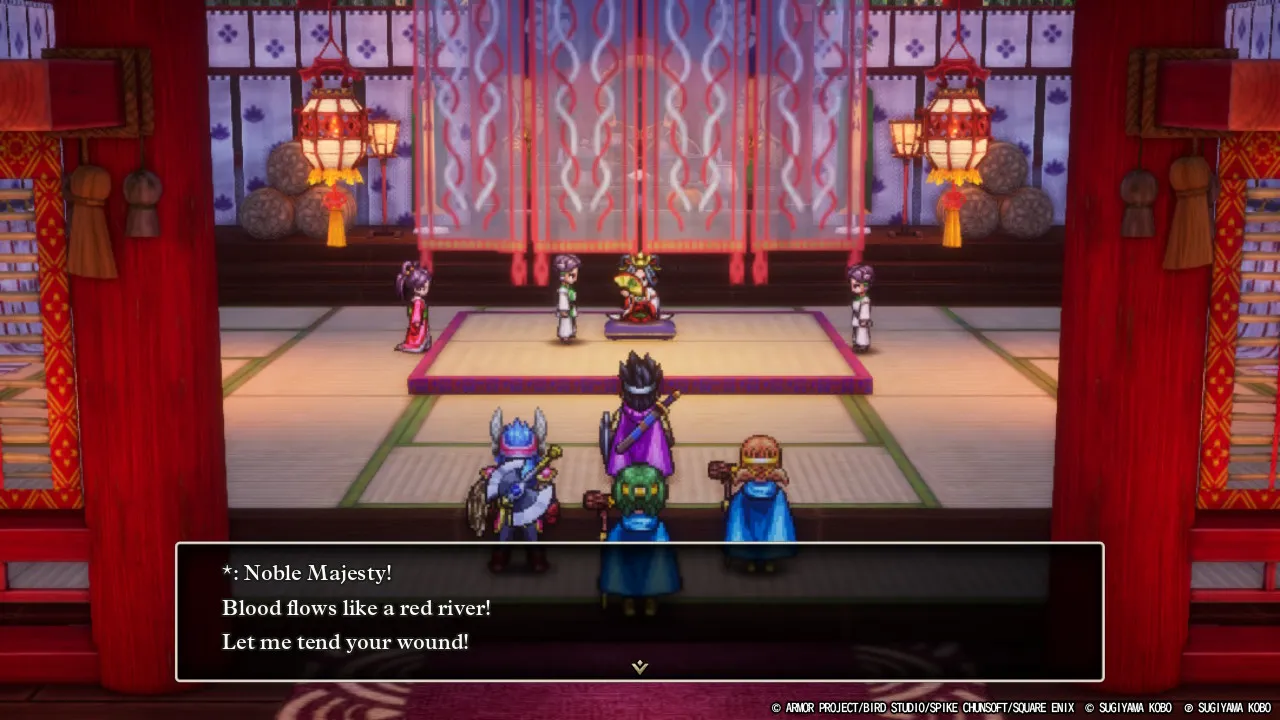
*: Noble Majesty! Blood flows like a red river! Let me tend your wound!
🗣️ 現代英語: “Your Majesty! You’re bleeding badly! Let me treat your wound!”
対訳: 「おお、女王様! 血が赤い川のように流れております! お傷の手当てをさせてください!」
- Noble Majesty — 「Majesty(陛下)」への敬称。Your Majesty の変奏で、女王への呼びかけ。
- tend — (傷・病人などを)「手当てする・世話する」。
tend a wound/tend the sickで頻出。⚠️ 自動詞のtend to do(〜しがちだ)とは別語義。
02
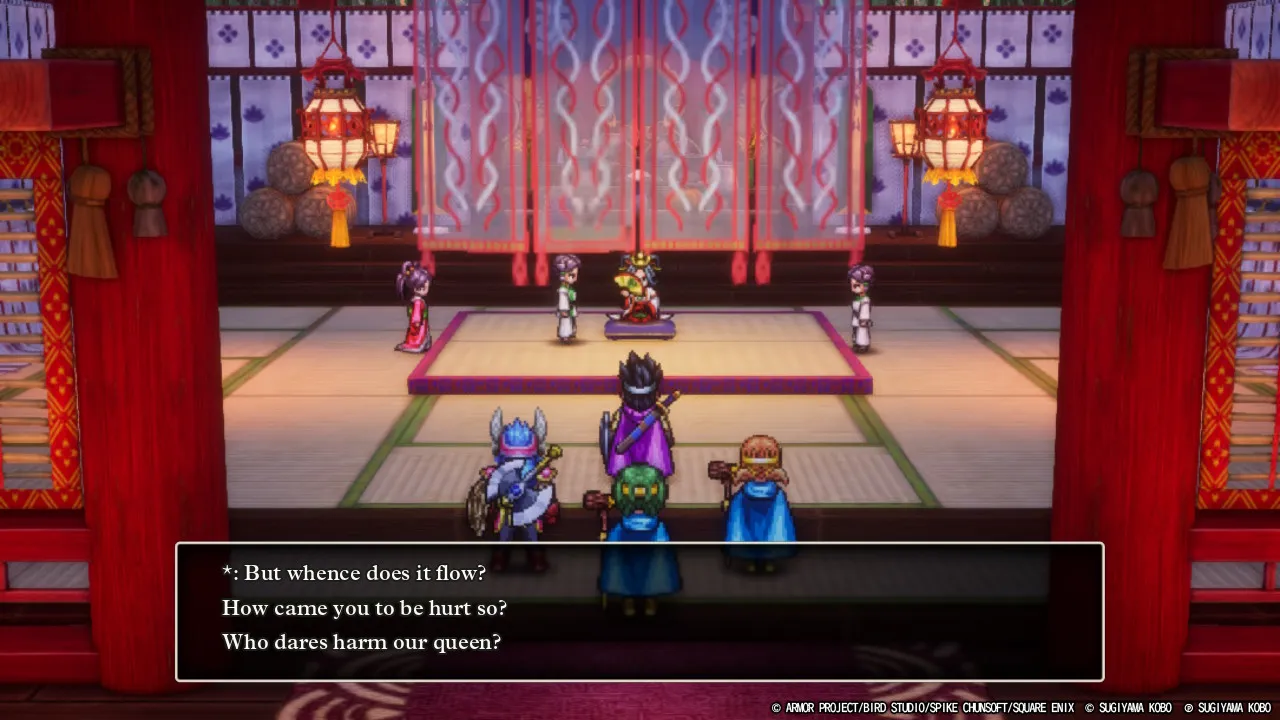
*: But whence does it flow? How came you to be hurt so? Who dares harm our queen?
🗣️ 現代英語: “But where is it coming from? How did you get hurt like this? Who would dare hurt our queen?”
対訳: 「だが、それはどこから流れ出ている? どうしてそのような傷を負われたのか? 誰が女王様を害そうというのか?」
- whence — 古語で「どこから(= from where)」。
whence does it flow?= どこから流れるのか。対のhence(ここから/それゆえ)、thence(そこから)もセットで覚える。 - How came you to be hurt so? — 古い倒置疑問。現代英語なら How did you come to be hurt so?。
come to be ~=「〜の状態になる」、文末so=「そのように/それほどに」。 - Who dares harm ~? —
dare(あえて〜する)+原形。「誰が女王を害する度胸があるのか」という威嚇のニュアンス。
03
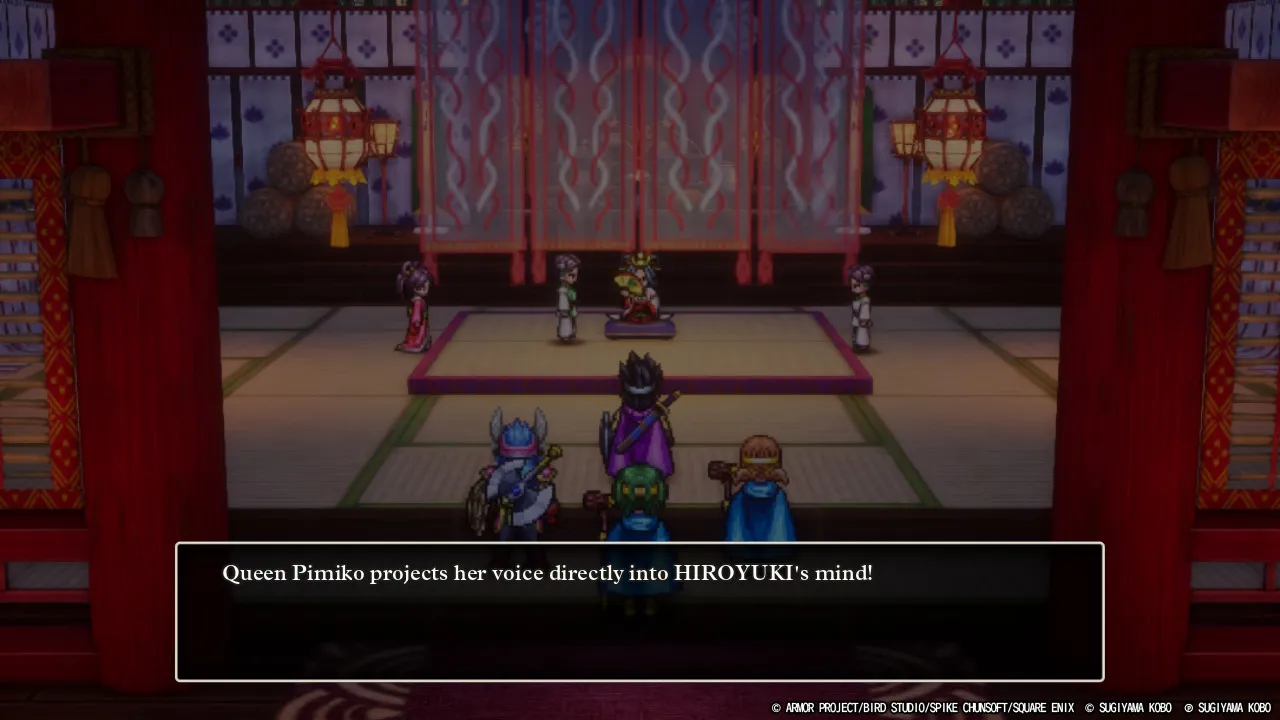
Queen Pimiko projects her voice directly into HIROYUKI’s mind!
対訳: 「卑弥呼(ピミコ)は声を直接ヒロユキの心の中に届けた!」
- project one’s voice into ~ — 「声を〜へ送り込む/投射する」。
projectは「投影する・響かせる」。テレパシーで語りかける描写。
04
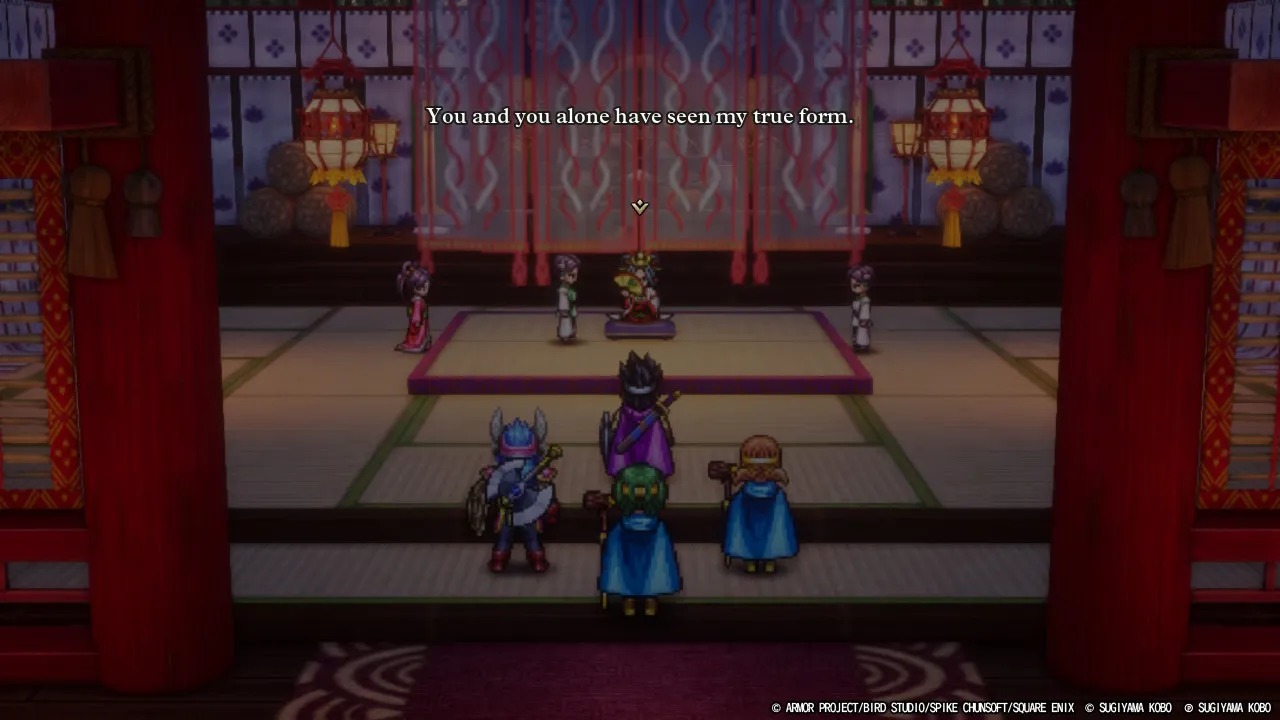
You and you alone have seen my true form.
🗣️ 現代英語: “You’re the only one who has ever seen my true form.”
対訳: 「お前だけが、わらわの真の姿を見た。」
- you and you alone — 「お前ただ一人だけが」。
X and X aloneで強い限定の決まり文句(= only you)。 - true form — 「真の姿・正体」。RPG・神話頻出。
05
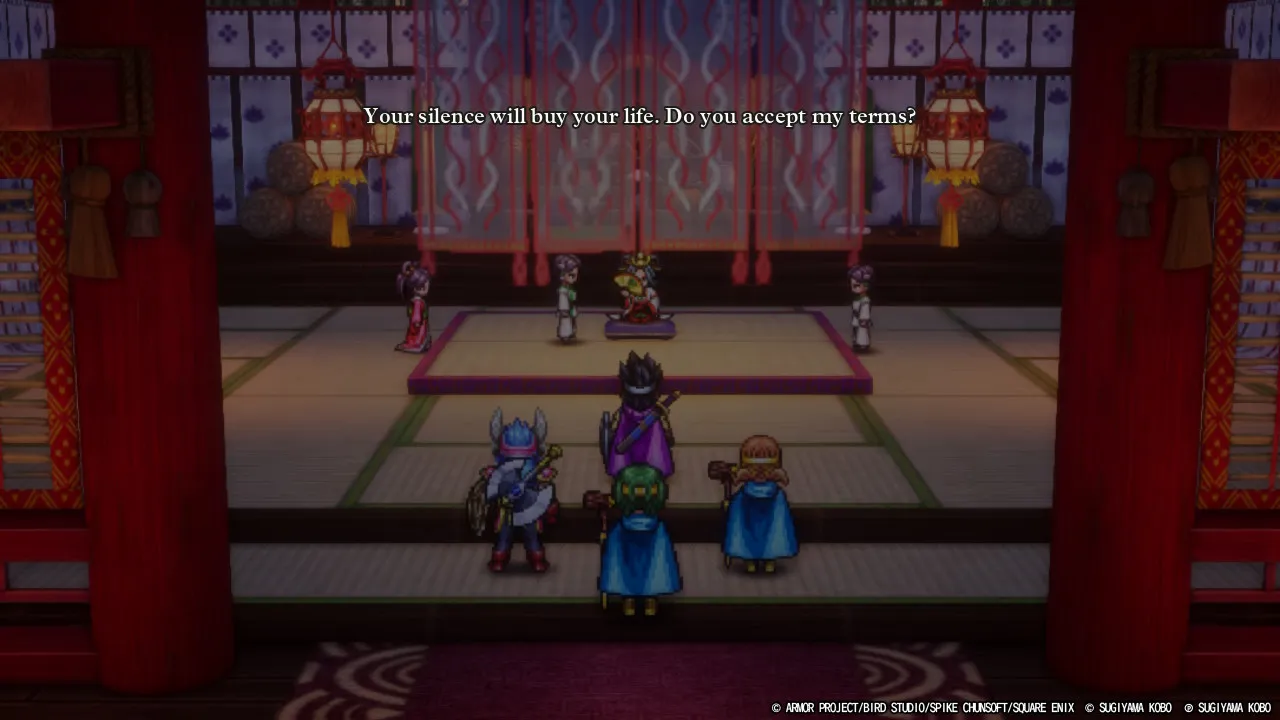
Your silence will buy your life. Do you accept my terms?
🗣️ 現代英語: “If you stay quiet, I’ll let you live. Do you accept this deal?”
対訳: 「沈黙すれば命は助けてやる。この条件を呑むか?」
- buy your life — 直訳「命を買う」→「(沈黙という代償で)命を購(あがな)う・助かる」。
buy time(時間稼ぎ)と同じ比喩的 buy。 - terms — (複数形で)「条件・取り決め」。
accept/agree to the terms。⚠️ 単数の term(用語・期間)と語義が違う。
06
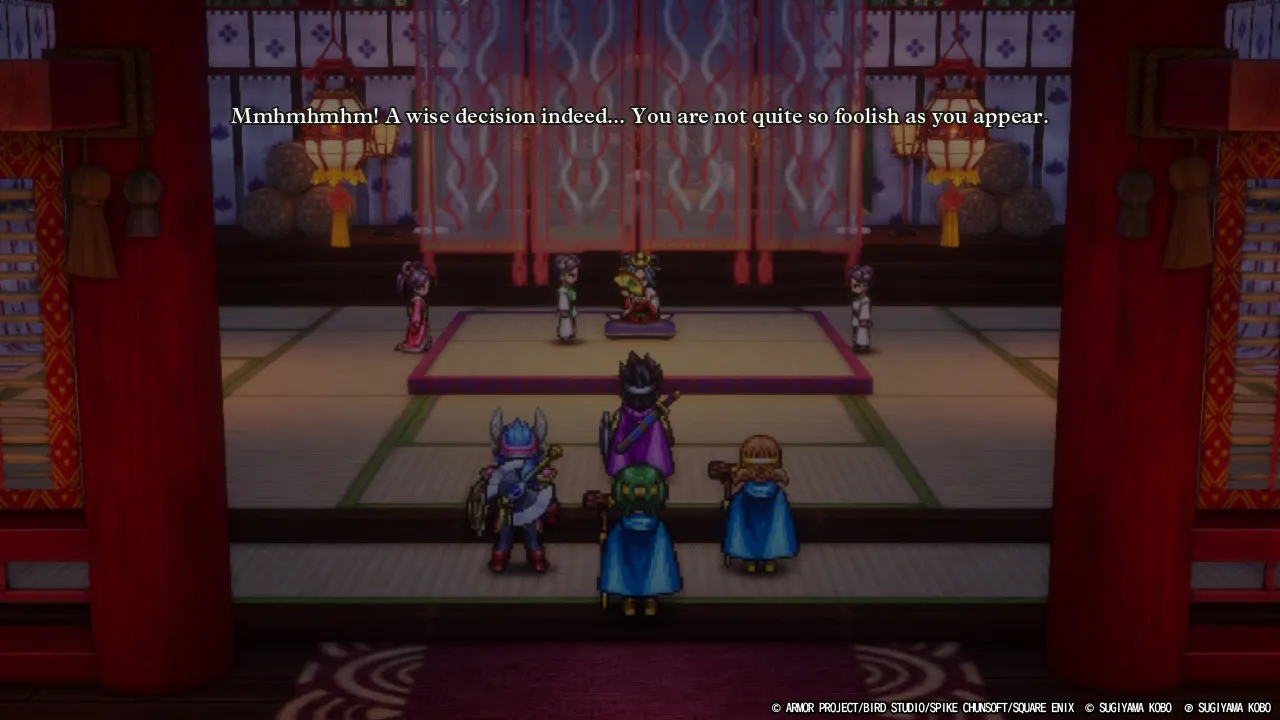
Mmhmhmhm! A wise decision indeed… You are not quite so foolish as you appear.
🗣️ 現代英語: “That’s a wise choice… You’re not as foolish as you look.”
対訳: 「ふふふ……賢明な判断よ。見かけほど愚かではないようだな。」
- A wise decision indeed —
indeedを後置して強調(「実に賢明だ」)。名詞句だけで言い切る簡潔な感嘆。 - not quite so foolish as you appear —
not so A as B(Bほどには A でない)の古風型。現代口語はnot as foolish as you look。遠回しの皮肉(backhanded compliment)。
07
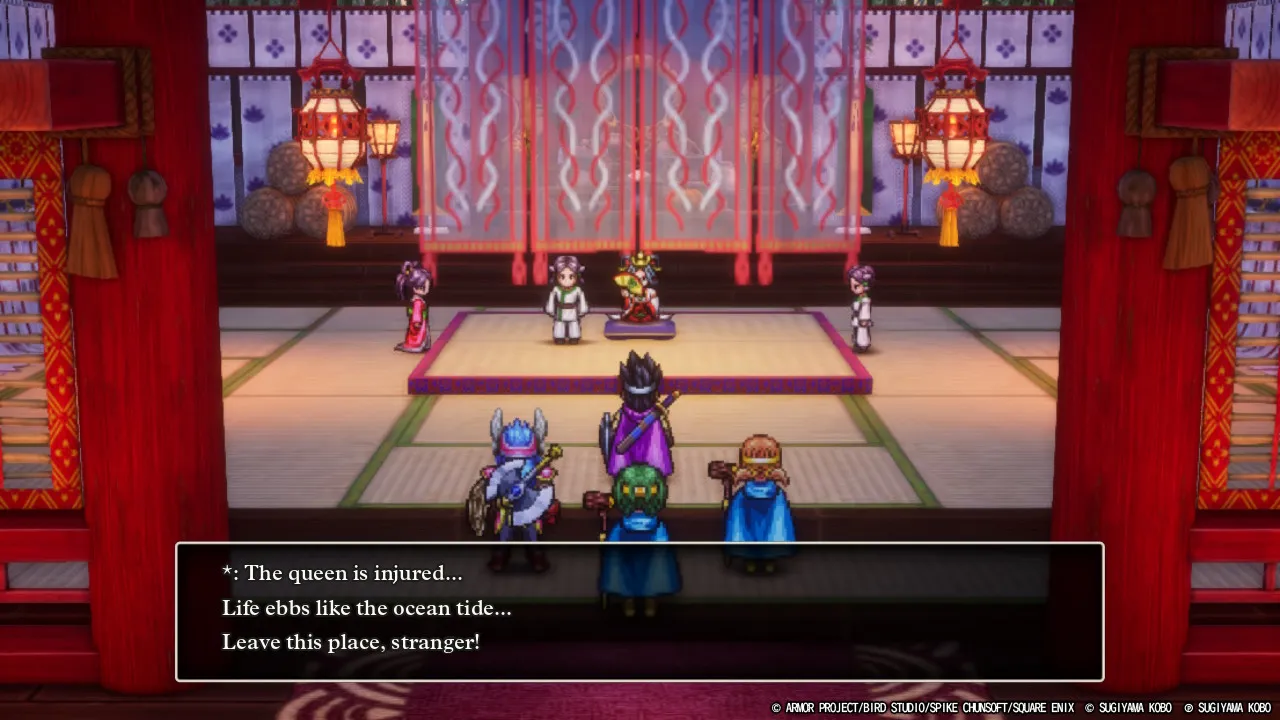
*: The queen is injured… Life ebbs like the ocean tide… Leave this place, stranger!
🗣️ 現代英語: “The queen is hurt… Her life is fading away… Get out of here, stranger!”
対訳: 「女王様がお怪我を……。命が潮のように引いていく……。よそ者よ、立ち去れ!」
- ebb — 「(潮が)引く」→比喩で「(生命・力が)衰えていく」。名詞句
the ebb and flow(盛衰・浮き沈み)が超頻出イディオム。 - like the ocean tide — 「潮の満ち引きのように」。生命が引き潮のように失われる詩的表現。
08
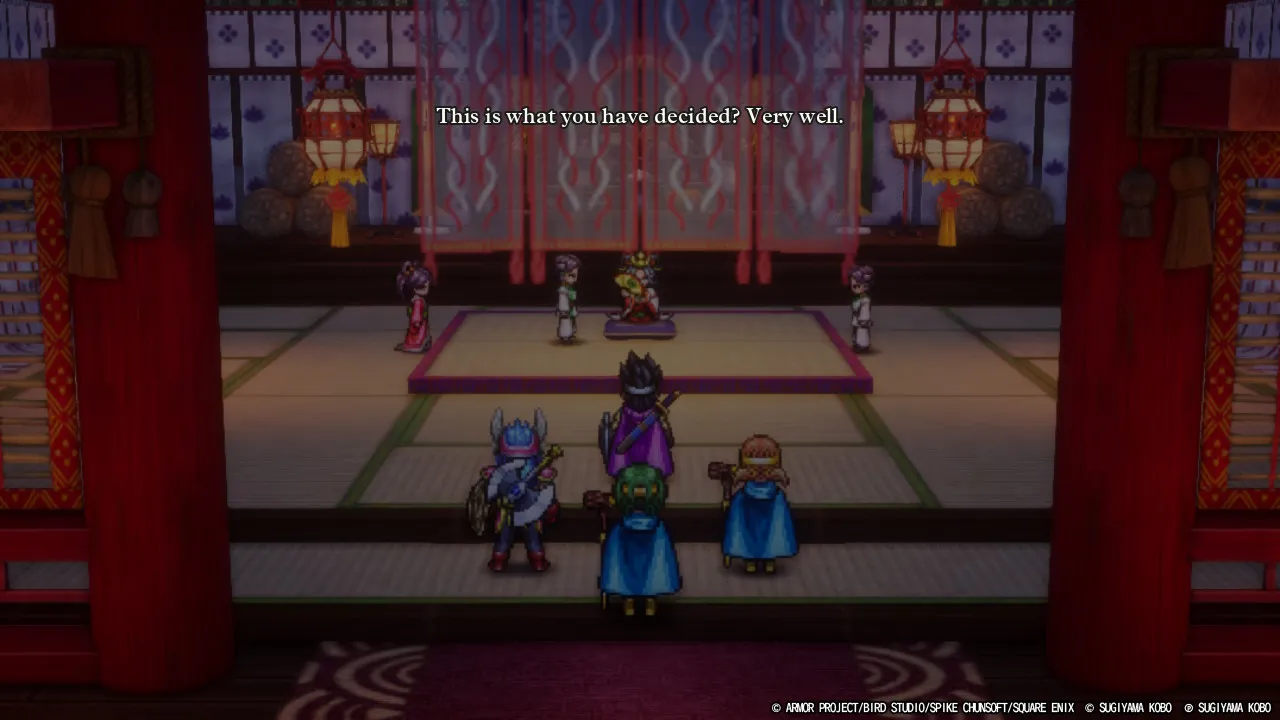
This is what you have decided? Very well.
🗣️ 現代英語: “So this is what you’ve decided? All right then.”
対訳: 「それがお前の決断か。よかろう。」
- Very well. — 「よろしい/承知した」。しぶしぶ・厳かに同意する時の定番フレーズ。日常の OK より格式が高い。
09 — Orochi(ヤマタノオロチ)
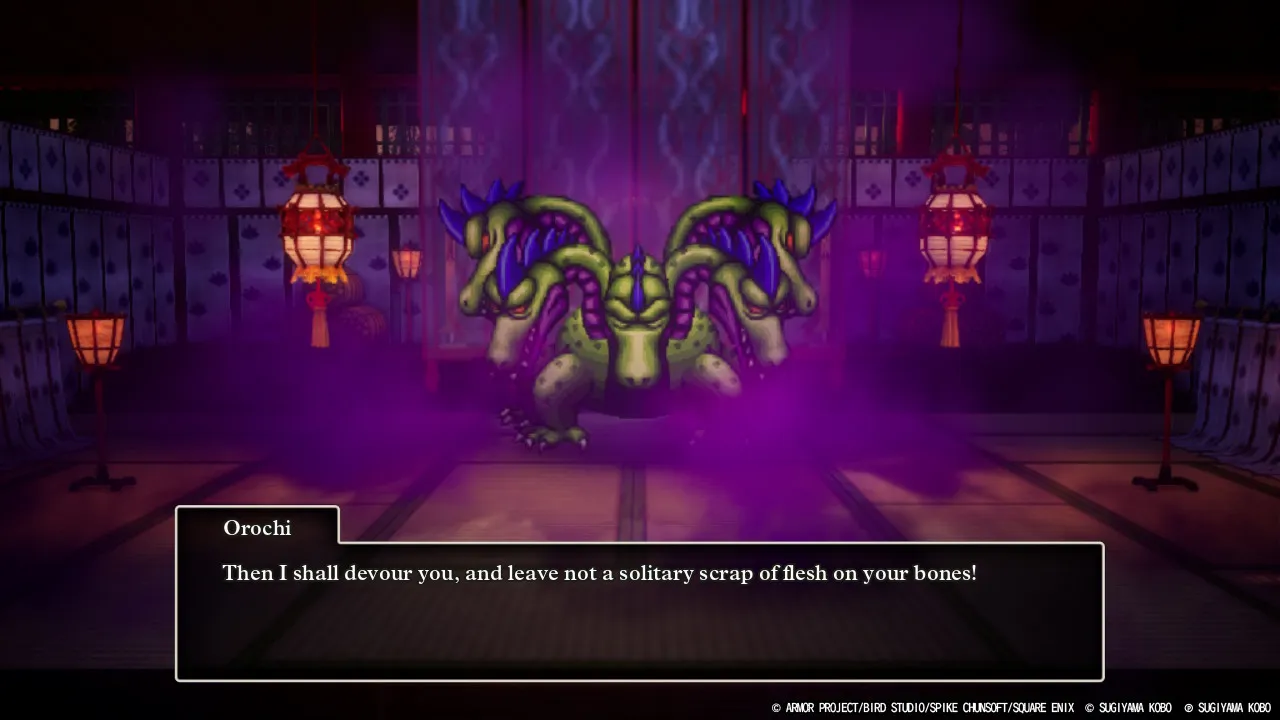
Orochi: Then I shall devour you, and leave not a solitary scrap of flesh on your bones!
🗣️ 現代英語: “Then I’ll devour you and won’t leave a single scrap of flesh on your bones!”
対訳: 「ならば貴様を喰らい尽くし、骨に肉のひとかけらも残さぬ!」
- I shall — 一人称の
shallは「強い意志(〜してやる)」。古風・威嚇的。 - devour — 「むさぼり食う」。
eatより獰猛。比喩でdevour a book(本を貪り読む)も。 - leave not a solitary scrap of flesh —
leave not ~は古い否定(= do not leave)。a solitary scrap「たったひとかけらも(〜ない)」=強調否定。scrap of flesh「肉片」。
Scene 2 — オロチ戦・レベルアップ
10
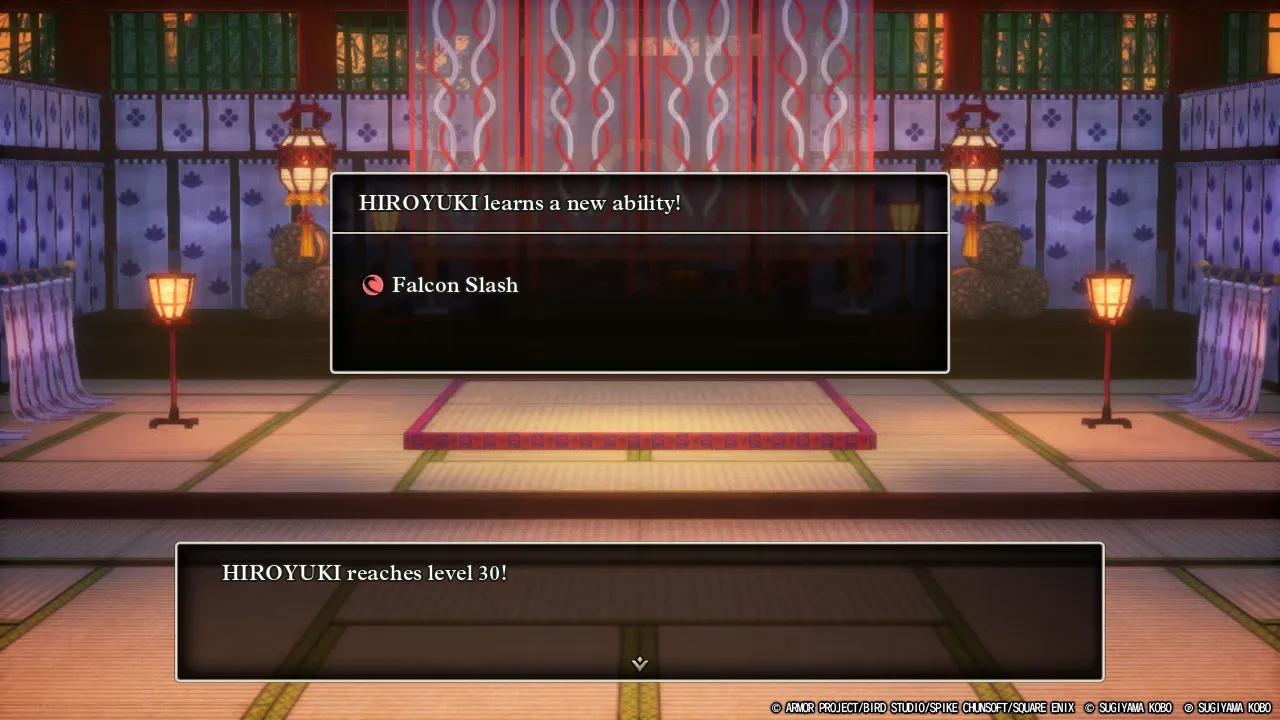
HIROYUKI learns a new ability! → Falcon Slash HIROYUKI reaches level 30!
- ability / spell — DQ英語版では物理技を ability、呪文を spell と区別。
- Falcon Slash — 「はやぶさ斬り」の英語名。2回攻撃の技。
11
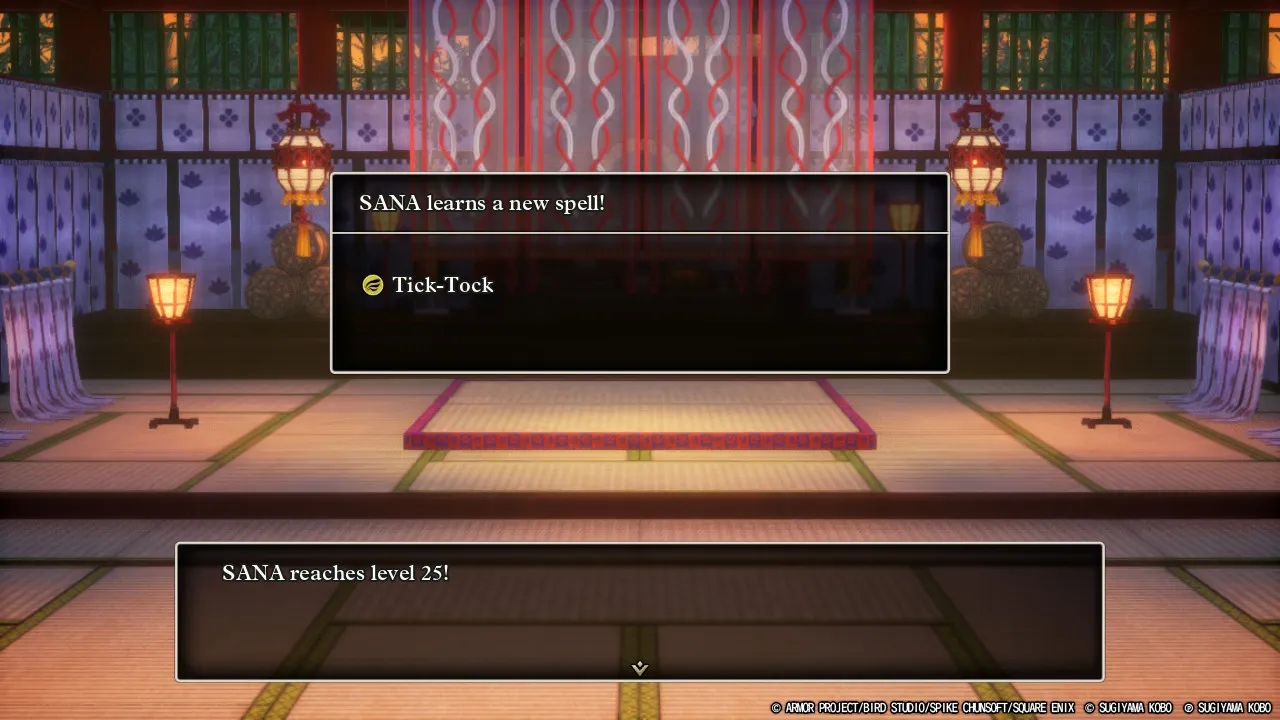
SANA learns a new spell! → Tick-Tock
- Tick-Tock — 日本版**「ラナルータ」**(昼↔夜を切り替える呪文)の英語名。擬音語(時計のチクタク=時間の流れ)で「時間操作」を表す言葉遊び。⚠️素早さ上昇ではない。詳細は末尾の造語対応表参照。
12
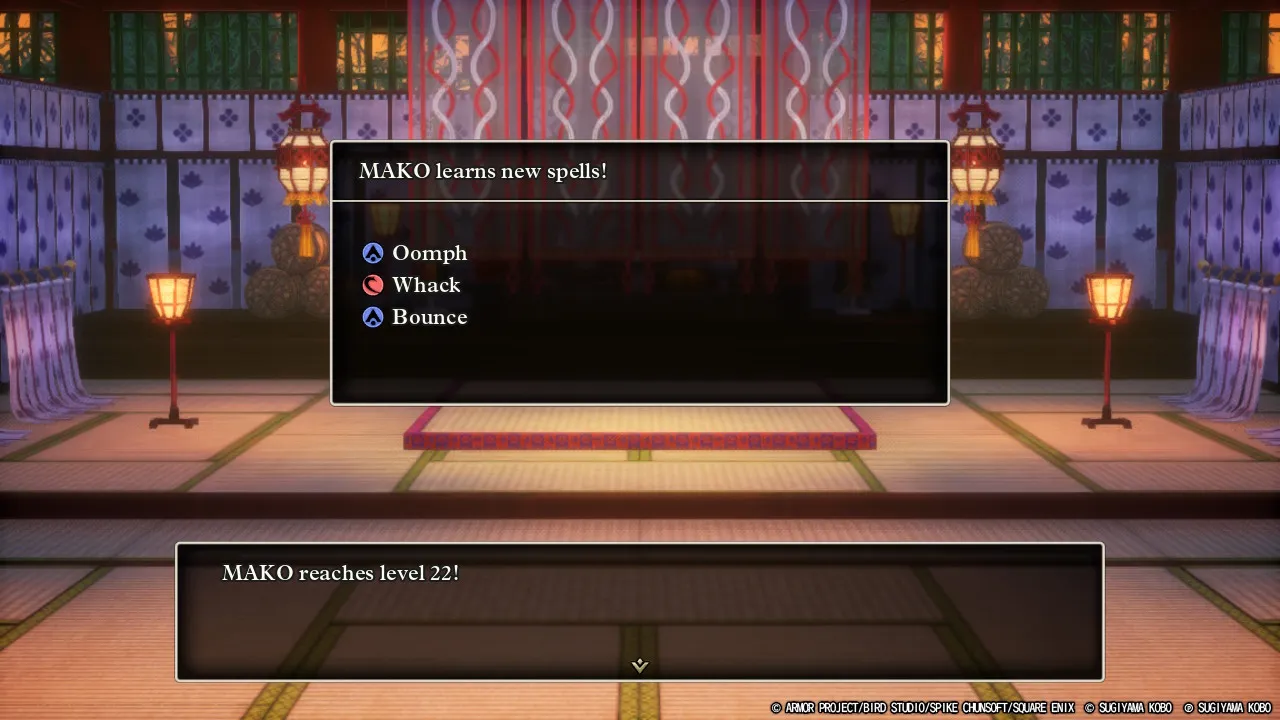
MAKO learns new spells! → Oomph / Whack / Bounce
- Oomph — 「バイキルト(攻撃力倍化)」。口語
oomph=「力・迫力・パンチ」。 - Whack — 「ザキ(即死)」。
whackはスラングで「殺る」。 - Bounce — 「マホカンタ(呪文跳ね返し)」。文字通り「跳ね返す」。
13 — Orochi
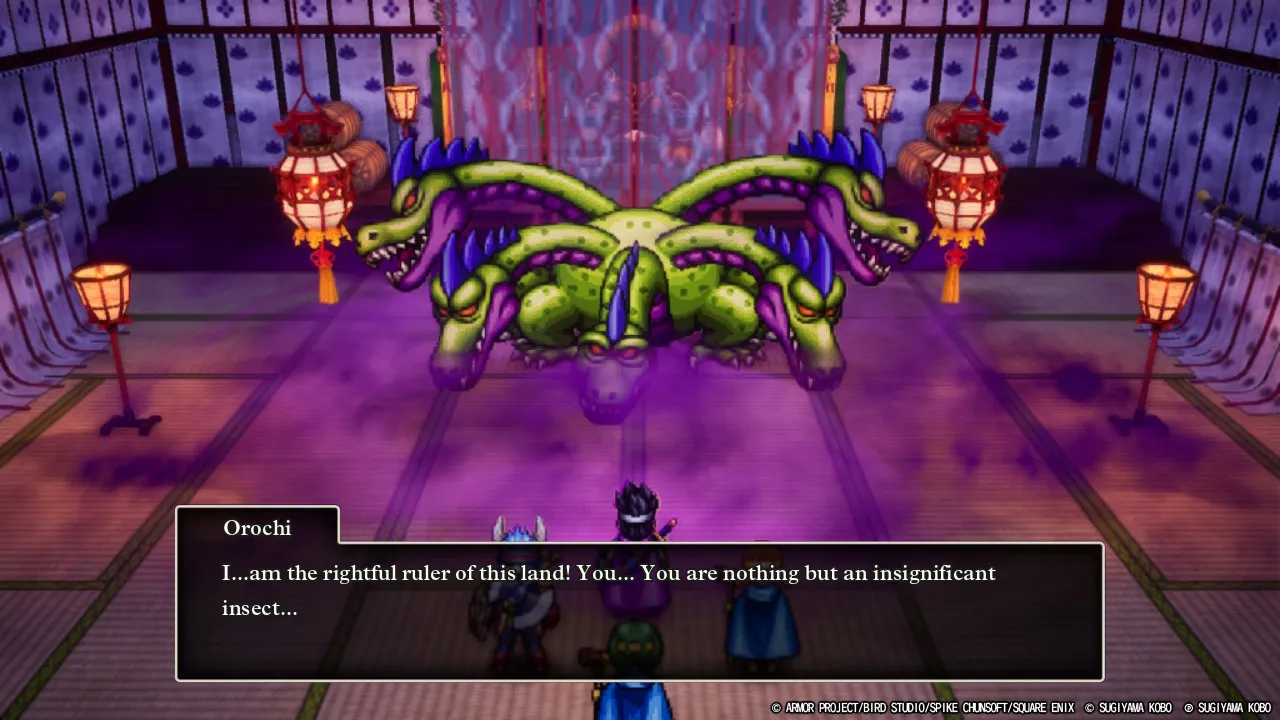
Orochi: I…am the rightful ruler of this land! You… You are nothing but an insignificant insect…
🗣️ 現代英語: “I am the rightful ruler of this land! You’re nothing but a tiny, insignificant insect…”
対訳: 「わ……わらわこそ、この地の正当な支配者だ! 貴様など……取るに足らぬ虫けらにすぎぬ……。」
- rightful — 「正当な権利を持つ」。
rightful ruler/heir/owner(正統な支配者・後継者・持ち主)。 - nothing but ~ — 「〜にすぎない(= only)」。強い見下し。
- insignificant — 「取るに足らない・ちっぽけな」。
significant(重要な)の反意語。
14 — Orochi
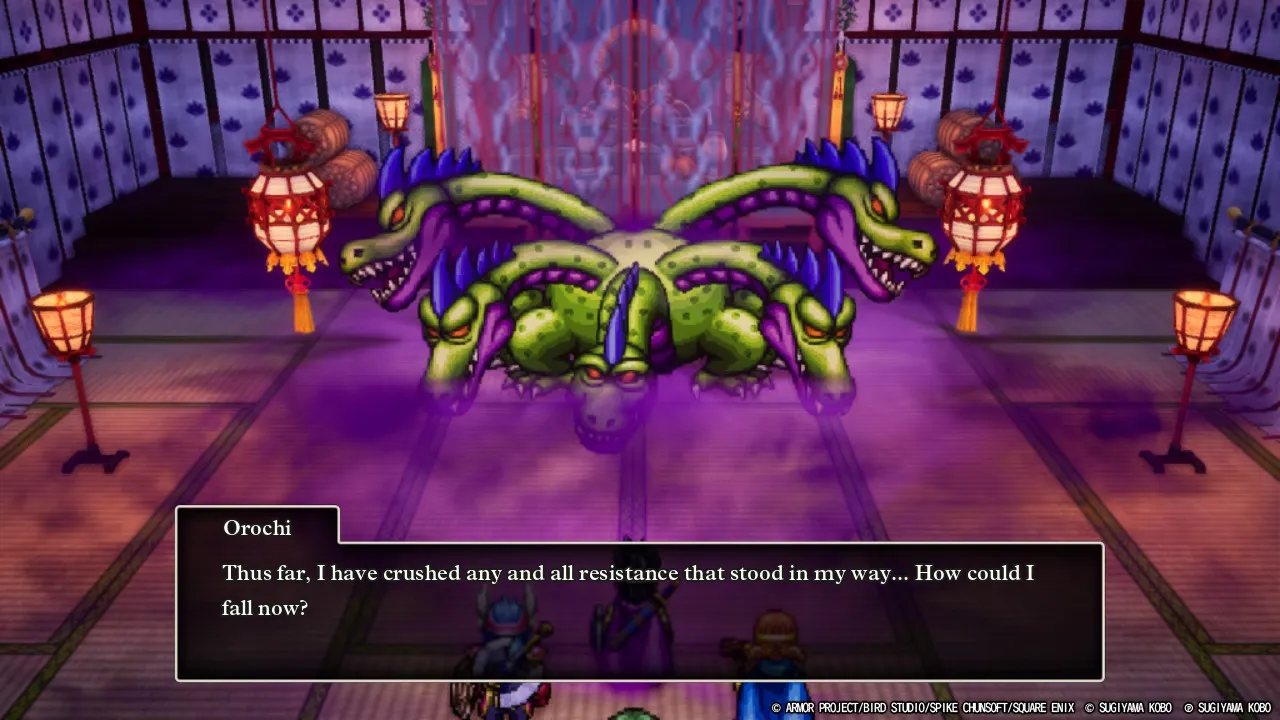
Orochi: Thus far, I have crushed any and all resistance that stood in my way… How could I fall now?
🗣️ 現代英語: “So far, I’ve crushed every bit of resistance in my way… How could I lose now?”
対訳: 「これまで、立ちはだかる抵抗はことごとく粉砕してきた……。なぜ今さら倒れることがあろうか?」
- thus far — 「これまでのところ(= so far)」のフォーマル版。
- any and all — 「ありとあらゆる」。法律文書的な強調表現(重複させて網羅性を強調)。
- stood in my way —
stand in one's way「(人の)行く手を阻む・邪魔をする」。重要イディオム。 - How could I fall now? — 反語(「倒れるはずがない」)。
fallはここで「(強者が)滅びる・敗れる」。
Scene 3 — 真相のナレーション
15
And so it was discovered that Pimiko was in fact Orochi all along.
🗣️ 現代英語: “And that’s how it was revealed that Pimiko had been Orochi all along.”
対訳: 「こうして、卑弥呼の正体は初めからオロチであったことが明らかになった。」
- And so ~ — 物語の締め・帰結を導く「こうして〜」。
- was in fact ~ all along —
in fact(実は)+all along(最初からずっと)。「実は初めからずっと〜だった」というどんでん返しの定型。
16
Orochi abused her position of power, forcing the village to offer up its maidens for her to devour.
🗣️ 現代英語: “Orochi abused her power, forcing the village to hand over its young women for her to eat.”
対訳: 「オロチは権力の座を悪用し、村に乙女たちを差し出させては喰らっていた。」
- abuse one’s position of power — 「権力(の地位)を濫用する」。時事英語頻出。
- force A to do — 「Aに無理やり〜させる」。
- offer up — 「(生贄として)差し出す・捧げる」。
offer up a sacrifice。 - maiden — 古語「乙女・未婚の娘」。
- for her to devour —
for + 意味上の主語 + to do(オロチが喰らうために)。
17
The shocking truth spread through the village like wildfire.
対訳: 「衝撃の真実は、野火のように村中へ広まった。」
- spread like wildfire — 最重要イディオム「(噂・うわさ・火が)燎原の火のごとく一気に広まる」。日常会話でもニュースでも頻出。
Scene 4 — 精霊ルビス(光の存在)の導き
18
You’ve had quite the ordeal, haven’t you…
対訳: 「ずいぶんと過酷な試練を経てきたのですね……。」
- quite the ordeal —
quite the + 名詞「なかなかの〜・大した〜」。ordeal=「(厳しい)試練・苦難」。 - haven’t you — 付加疑問。共感・労(ねぎら)いのトーン。
19
Well done, brave adventurer. You have taken yet another step on your journey to restore peace to the realm.
🗣️ 現代英語: “Well done, brave adventurer. You’ve taken another step on your journey to bring peace back to the world.”
対訳: 「よくやりました、勇敢な冒険者よ。世界に平和を取り戻す旅の、また一歩を進めましたね。」
- yet another — 「(すでにある上に)さらにもう一つの」。
anotherの強調。 - take a step on one’s journey — 「旅の一歩を踏み出す」。比喩的にも使える。
- restore peace to the realm —
restore A to B「BにAを取り戻す」。realm=「王国・領域」(格調高い world の言い換え)。
20
You must gather the orbs and take them to the shrine of the Everbird.
対訳: 「いくつものオーブを集め、不死鳥(ラーミア)の祠へ運ばねばなりません。」
- gather the orbs — 「オーブを集める」。DQ3の象徴的お使い。
orb=「宝珠・球体」。 - shrine — 「聖堂・祠・社」。
- the Everbird — 「ラーミア」の英語名。
ever-(永遠に)+bird=不死鳥。Everlastingなどと同じ接頭辞。
21
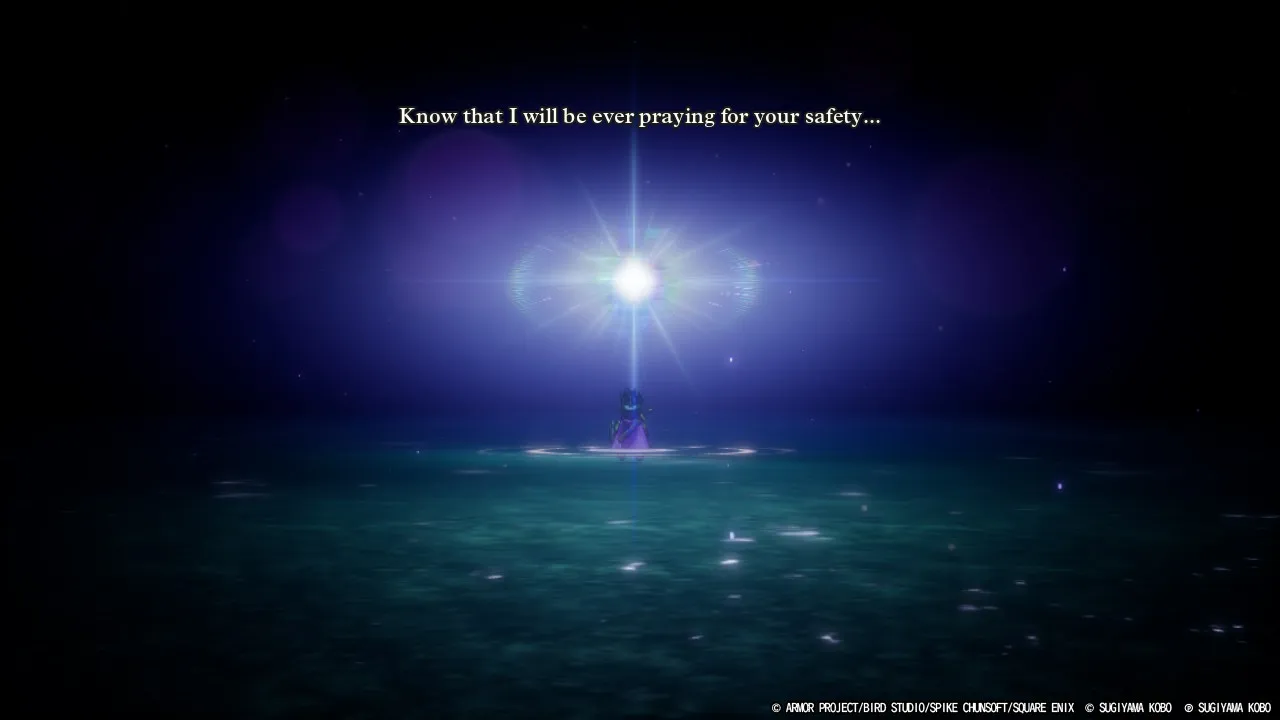
Know that I will be ever praying for your safety…
🗣️ 現代英語: “Just know that I’ll always be praying for your safety…”
対訳: 「あなたの無事を、わたしは常に祈っていると知っておいてください……。」
- Know that ~ — 命令形「〜を知っておきなさい/心に留めよ」。荘重な言い回し。
- ever — ここでは「常に・いつも(= always)」の古語的用法。
ever praying=「祈り続けて」。
Scene 5 — ジパングの人々の感謝
22
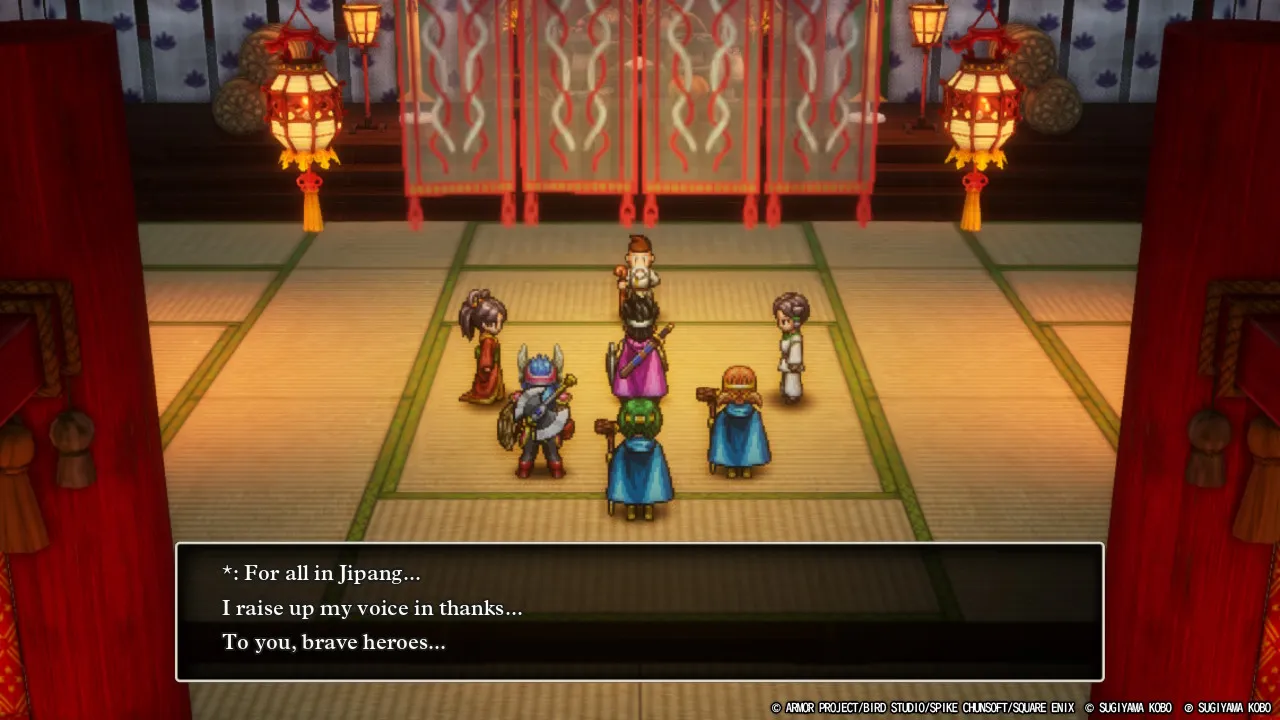
*: For all in Jipang… I raise up my voice in thanks… To you, brave heroes…
🗣️ 現代英語: “On behalf of everyone in Jipang… I want to give my thanks… to you, brave heroes…”
対訳: 「ジパングのすべての者に代わって……感謝の声を上げます……勇者の皆様へ……。」
- For all in Jipang — 「ジパングの皆を代表して/皆のために」。
- raise up one’s voice in thanks — 「感謝の声を上げる」。
in + 感情名詞(in thanks / in anger / in joy)=「〜の気持ちを込めて」。
23 — Yayoi(ヤヨイ)
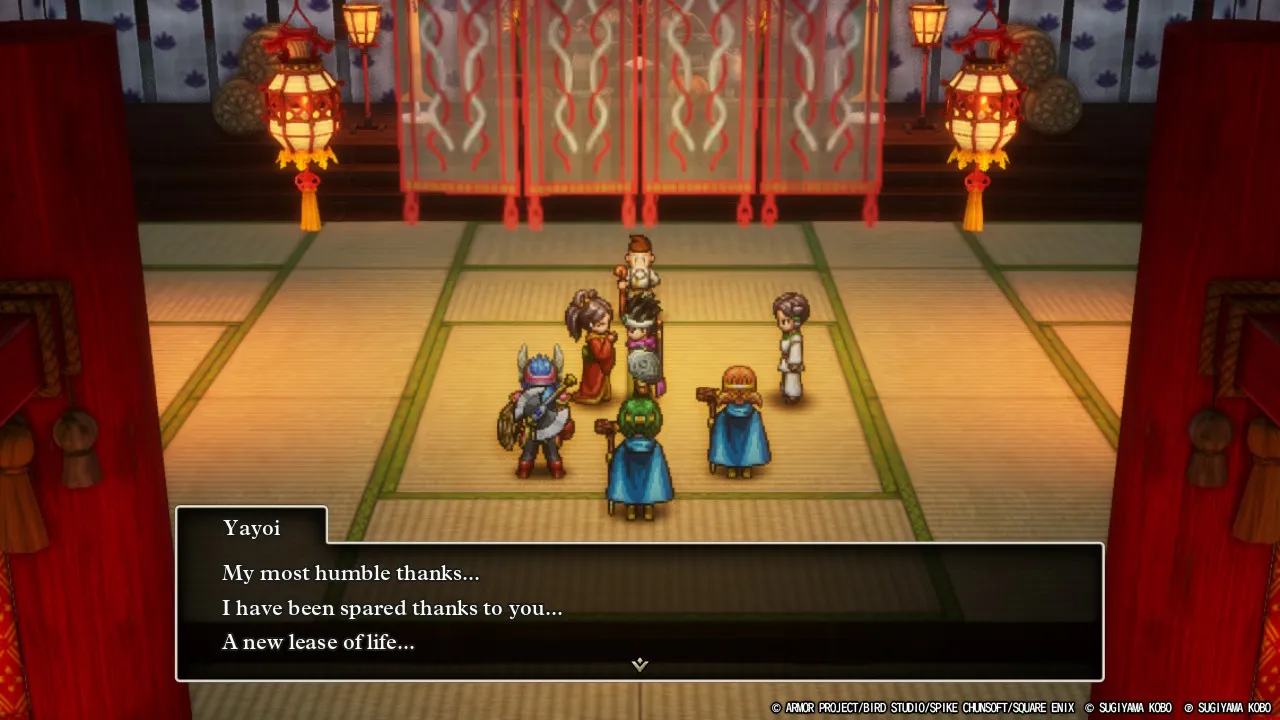
Yayoi: My most humble thanks… I have been spared thanks to you… A new lease of life…
🗣️ 現代英語: “Thank you so much… You saved my life… I feel like I’ve been given a fresh start…”
対訳: 「心より御礼申し上げます……。あなた方のおかげで命拾いしました……。新たな人生を授かったようです……。」
- My most humble thanks — 「謹んで深く感謝いたします」。
humble(謙虚な)で丁重さを出す定型。 - be spared — 「(死・災難を)免れる・助けられる」。
spare=「(命を)助ける/(手間を)省く」。 - a new lease of life — 重要イディオム「(生き返ったような)新たな活力・第二の人生」。英:
lease of life/ 米:lease on life。
24 — Yayoi
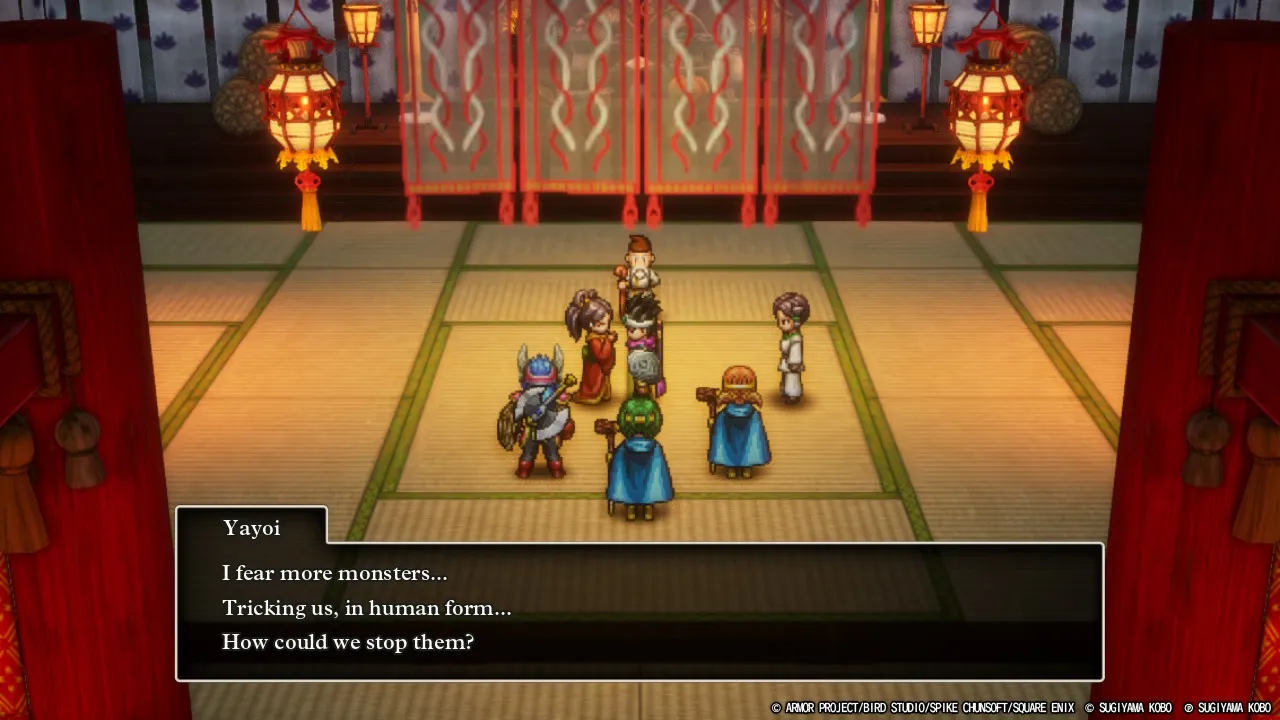
Yayoi: I fear more monsters… Tricking us, in human form… How could we stop them?
🗣️ 現代英語: “I’m afraid there are more monsters… deceiving us while disguised as humans… How could we ever stop them?”
対訳: 「もっと多くの魔物がいるのでは……。人の姿に化けて、私たちを欺いて……。どうすれば止められましょう?」
- I fear (that) ~ — 「残念ながら〜ではないかと案じる」。
I'm afraidの文語版。 - trick us, in human form —
in ~ form「〜の姿で」。trick=「だます・欺く」。 - How could we stop them? — ここは反語気味の不安「どうやって止められるというのか(=止めようがない)」。
25 / 26 — 老人(村長)
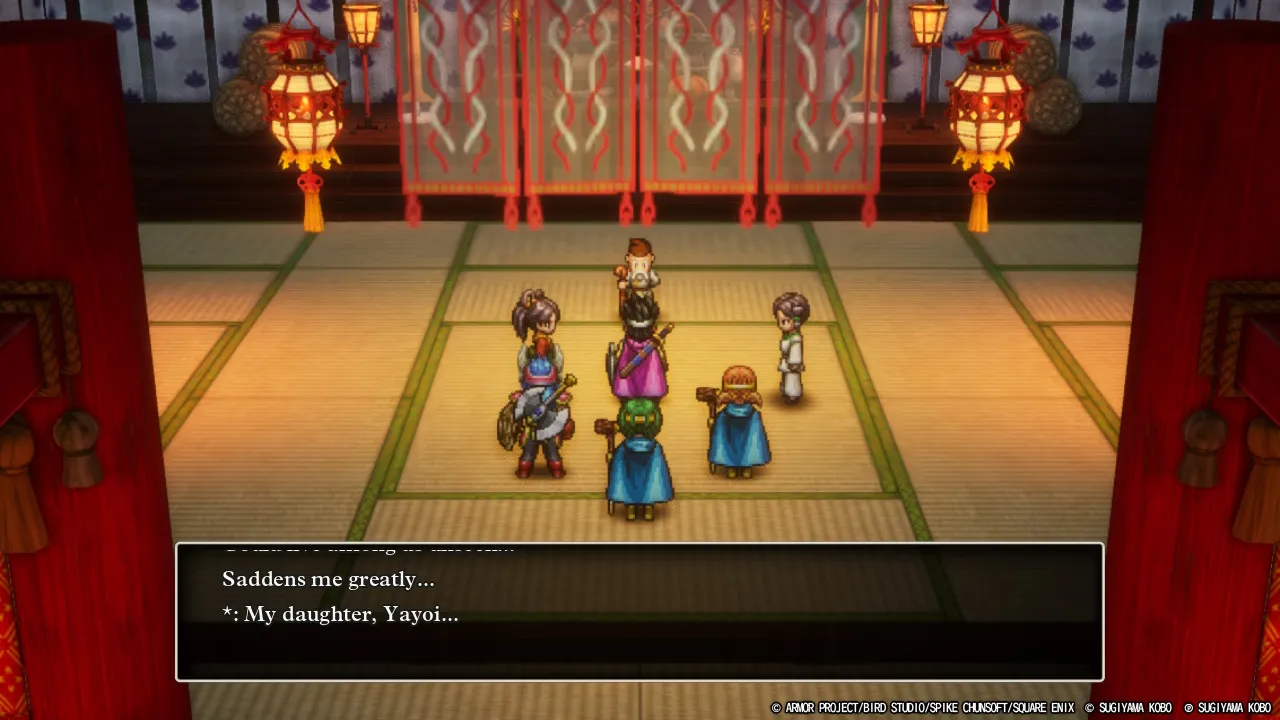
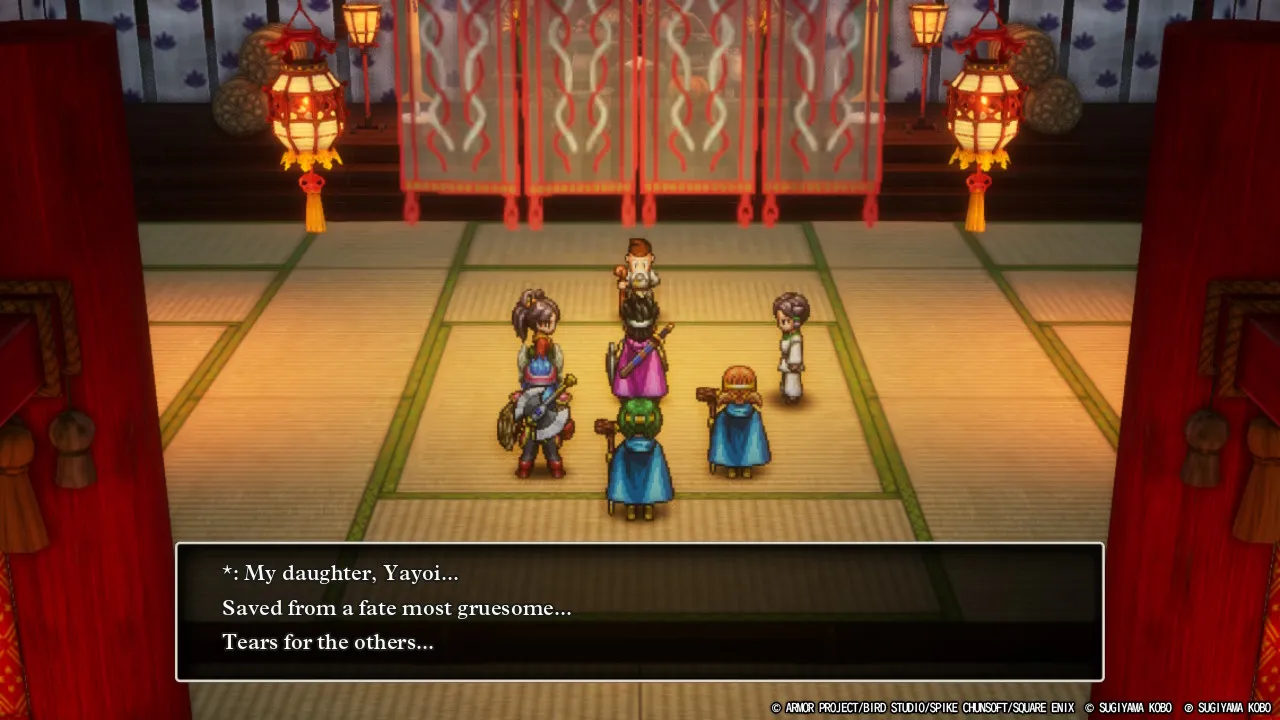
…Saddens me greatly… *: My daughter, Yayoi… Saved from a fate most gruesome… Tears for the others…
🗣️ 現代英語: “It makes me so sad… My daughter Yayoi was saved from a horrible fate… but I cry for the others…”
対訳: 「……深く心が痛みます……。わが娘ヤヨイは……世にもむごい運命から救われた……。だが他の者たちを思うと涙が……。」
- It saddens me greatly — 「それは私を大いに悲しませる」=無生物主語構文。
sadden(〜を悲しませる)。日本語は「私は悲しい」と訳すと自然。 - a fate most gruesome — 形容詞後置(= a most gruesome fate)の詩的語順。
gruesome=「身の毛もよだつ・凄惨な」。 - Tears for the others — 「他の犠牲者たちのために涙する」。動詞を省いた断片的・嘆きの文体。
27 — Yayoi
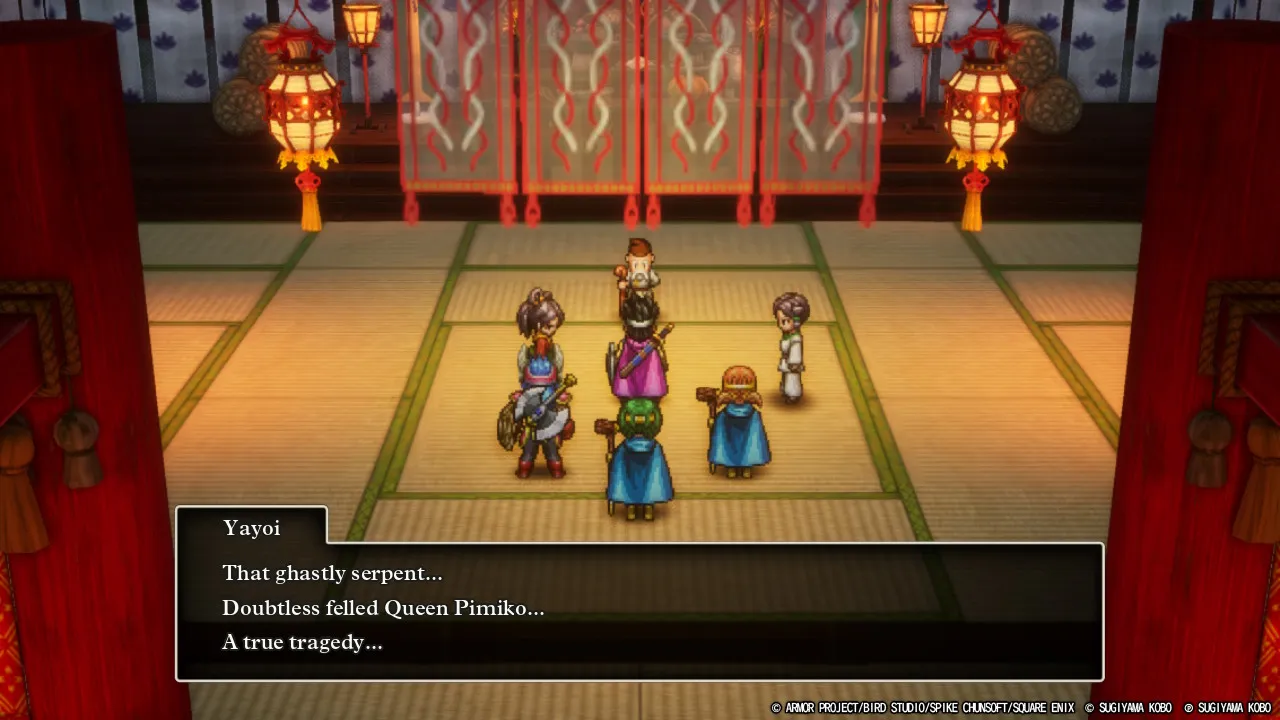
Yayoi: That ghastly serpent… Doubtless felled Queen Pimiko… A true tragedy…
🗣️ 現代英語: “That horrible serpent must have killed Queen Pimiko… It’s a real tragedy…”
対訳: 「あの恐ろしい大蛇が……きっと卑弥呼様を討ち倒したのでしょう……。まことの悲劇です……。」
- ghastly — 「恐ろしい・ぞっとする・幽霊のような」。
ghostと同語源。 - serpent — 「大蛇・蛇」(文語・聖書的。snake より荘重)。
- doubtless — 「疑いなく・きっと」(= no doubt)。
- felled —
fell(他動詞「切り倒す・打ち倒す」)の過去形。⚠️fall–fell–fallen(自動詞)とは別の規則動詞fell–felled–felled。fell a tree(木を伐る)。
28 — 村人
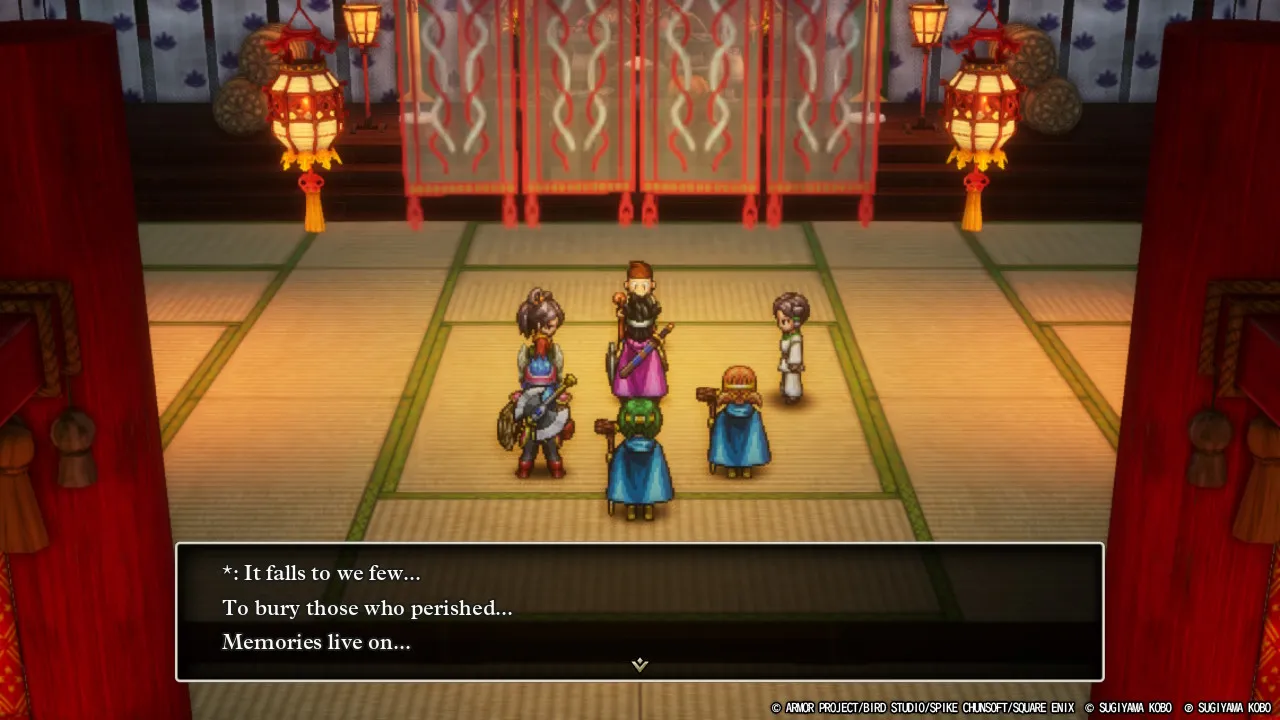
*: It falls to we few… To bury those who perished… Memories live on…
🗣️ 現代英語: “It’s up to the few of us… to bury those who died… Their memories live on…”
対訳: 「残された我ら数人の務めです……。亡き者たちを葬るのは……。思い出は生き続ける……。」
- It falls to ~ to do — 「〜するのは…の役目/責務となる」。重要構文。
It falls to me to decide. - we few — 文法的には
us fewが正しいが、ここは古風・荘重な誇張(cf. シェイクスピア “we few, we happy few”)。わざとの古文体。 - perish — 「(非業に)死ぬ・滅びる」。
dieの荘重版。 - live on — 「生き続ける・後世に残る」。
onが「継続」を表す句動詞。
29 — 村人(贈り物)
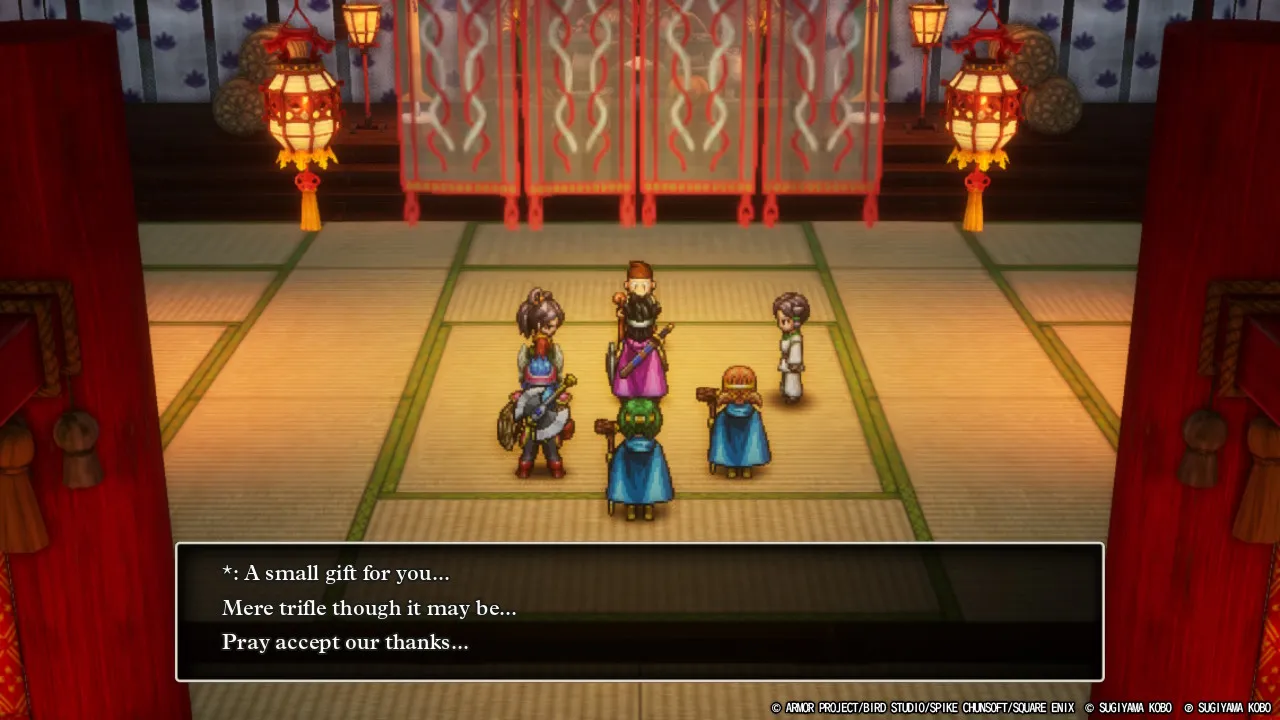
*: A small gift for you… Mere trifle though it may be… Pray accept our thanks…
🗣️ 現代英語: “Here’s a small gift for you… It may be just a trifle, but… please accept our thanks…”
対訳: 「ささやかな贈り物です……。取るに足らぬ物ではございますが……。どうか我らの感謝をお受け取りください……。」
- mere trifle — 「ほんの些細なもの・つまらない物」。
trifle=「些事・ささいなもの」。 - Mere trifle though it may be —
(Adj/N) though it may be=though it may be a mere trifle(譲歩節の倒置)。「つまらぬ物ではありますが」。上級頻出の倒置譲歩。 - Pray accept ~ — 古語の
pray=「どうか(= please)」。Pray accept...=「どうかお受け取りを」。
30–32 — 入手アイテム
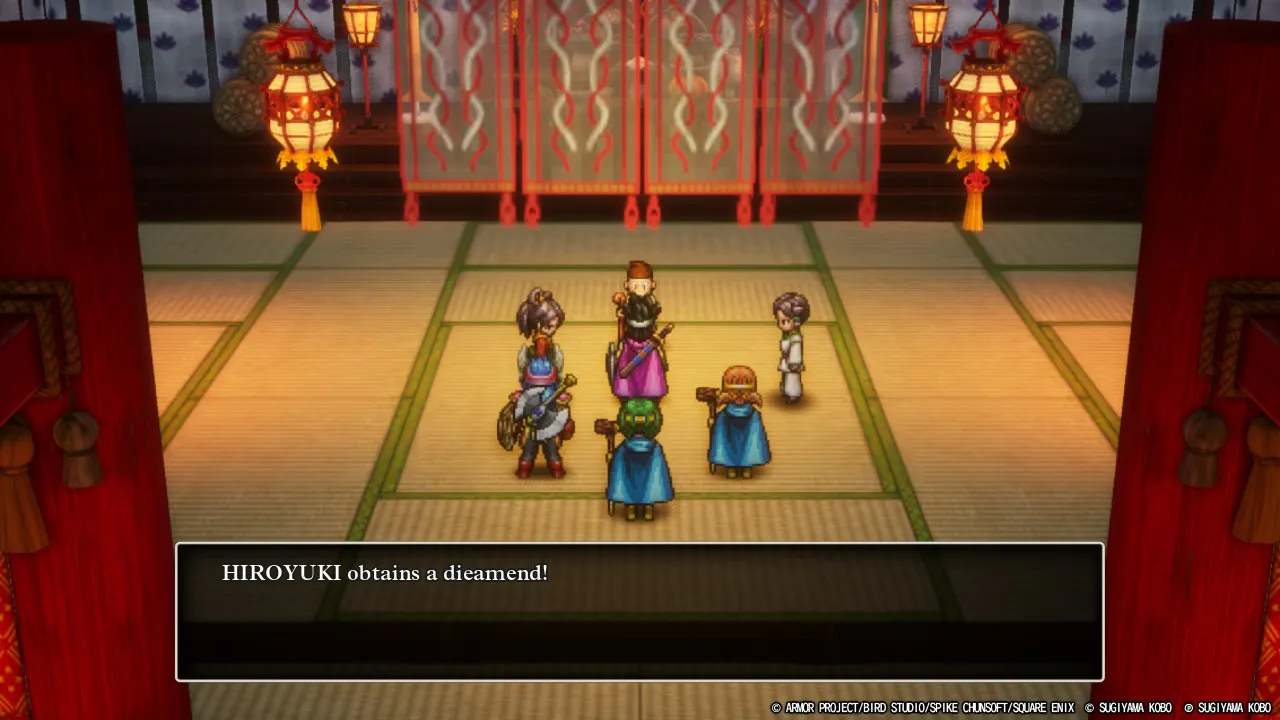
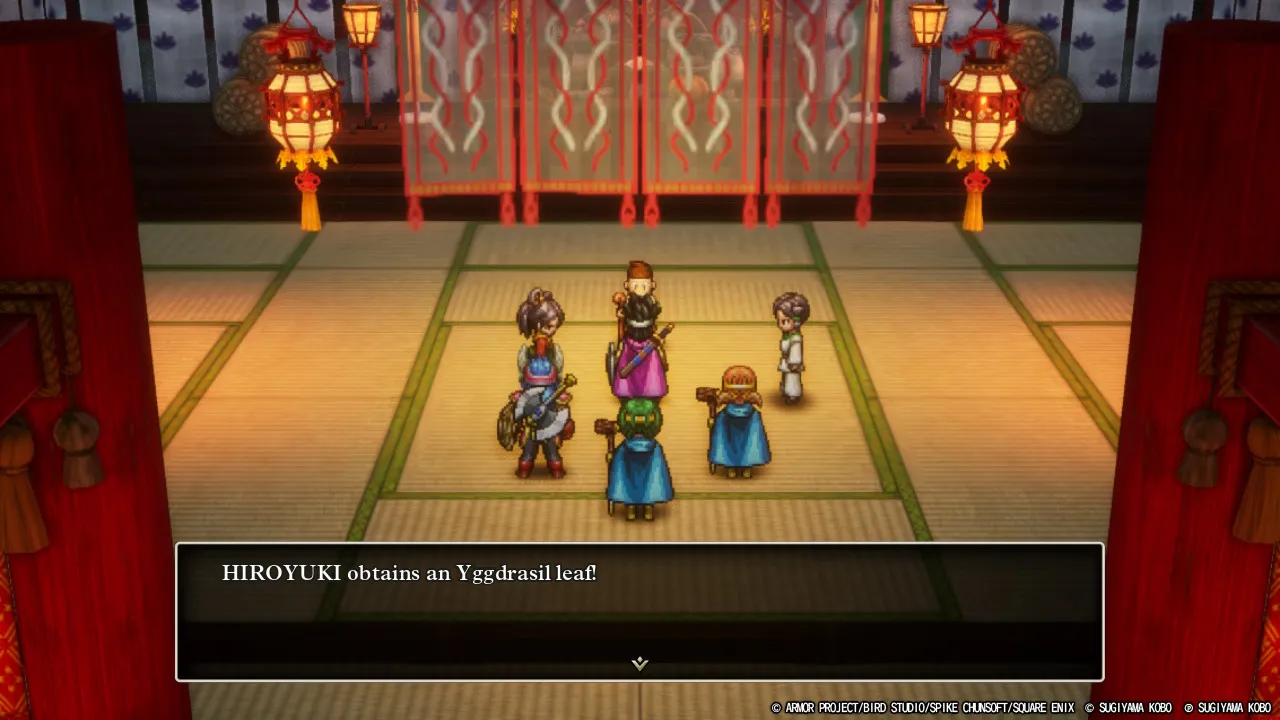
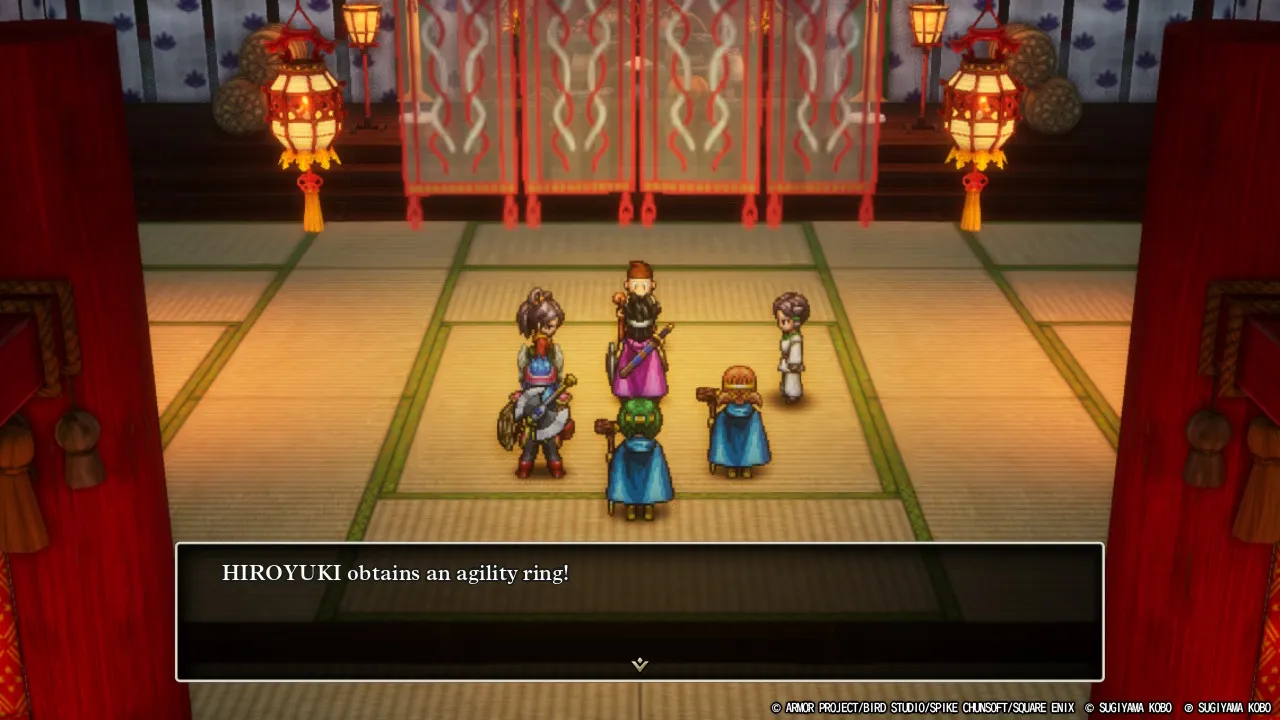
HIROYUKI obtains a dieamend! HIROYUKI obtains an Yggdrasil leaf! HIROYUKI obtains an agility ring!
- obtain — 「入手する・得る」(get のフォーマル版)。
- dieamend — 日本版**「いのちのいし(命の石)」**。die(死)+ amend(正す)+ diamond(ダイヤ)の三重の語呂合わせ造語。「死を帳消しにするダイヤ」=即死呪文(Whack/Thwack=ザキ/ザラキ)を1回肩代わりして砕け散る石。詳細は末尾の造語対応表参照。
- an Yggdrasil leaf — 日本版「せかいじゅのは(世界樹の葉)」。戦闘不能を回復する蘇生アイテム。北欧神話の世界樹ユグドラシルが語源。母音始まりの発音なので冠詞は an(Y は /ɪ/ 音)。
- agility ring — 日本版「すばやさのゆびわ」。
agility=「敏捷性・すばやさ」。素早さ+15の装備品。
33 — Yayoi
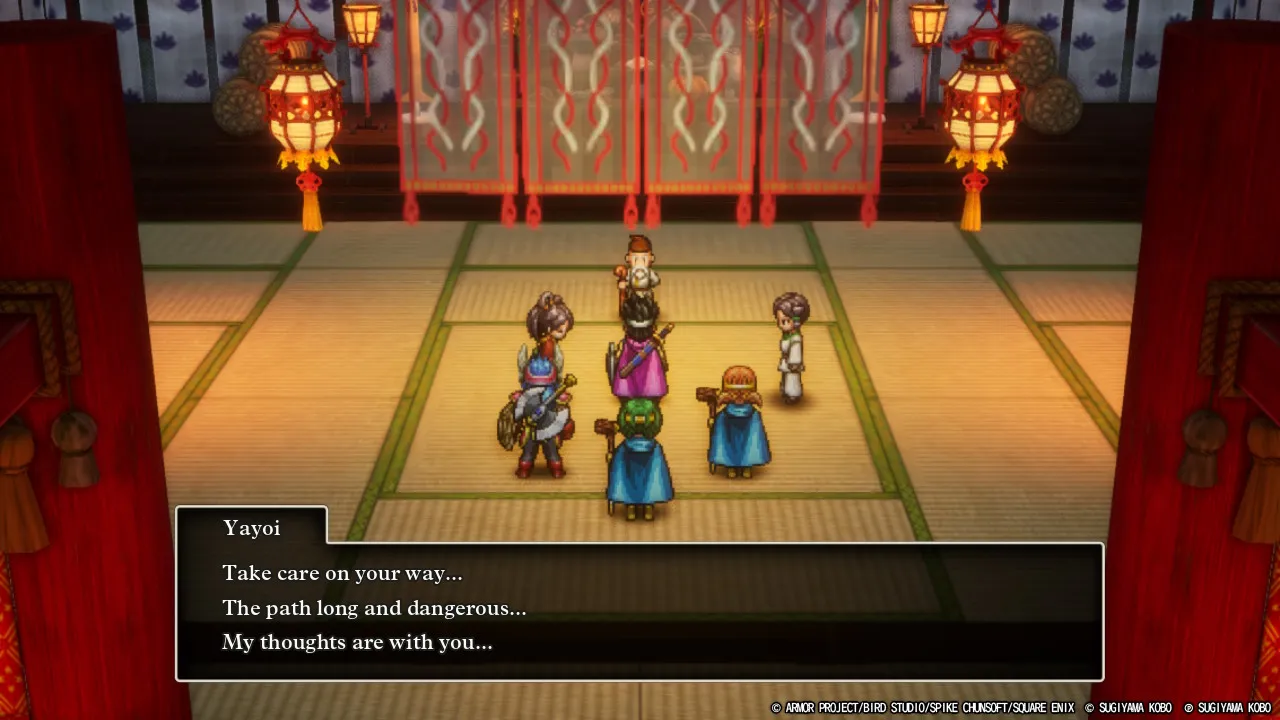
Yayoi: Take care on your way… The path long and dangerous… My thoughts are with you…
🗣️ 現代英語: “Take care on your way… The road is long and dangerous, but… my thoughts are with you…”
対訳: 「道中、お気をつけて……。道のりは長く危険でしょうが……。あなた方を想っています……。」
- Take care on your way — 「道中お気をつけて」。別れの定番。
- The path long and dangerous — be動詞省略(= The path is long and dangerous)の詩的断片。
- My thoughts are with you — 重要表現「あなたを案じています/心は共にあります」。見舞い・別れ・弔いで使う決まり文句。
🔑 このシーンの最重要ピックアップ(暗記推奨)
| 表現 | 意味 | 種類 |
|---|---|---|
| spread like wildfire | (噂などが)一気に広まる | イディオム |
| a new lease of life | 新たな活力・第二の人生 | イディオム |
| stand in one’s way | 行く手を阻む | イディオム |
| the ebb and flow | 盛衰・浮き沈み | イディオム |
| It falls to A to do | 〜はAの役目だ | 構文 |
| nothing but ~ | 〜にすぎない | 構文 |
| (N) though it may be | 〜ではあるが(譲歩倒置) | 構文 |
| My thoughts are with you | あなたを案じています | 定型句 |
| abuse one’s position of power | 権力を濫用する | コロケーション |
| whence / hence / thence | どこから/それゆえ/そこから | 古語 |
文体メモ(archaic register)
DQ英語版は意図的に古英語・詩的文体を多用:
- 倒置・be動詞省略: “The path long and dangerous”, “How came you to be hurt so?”
- 古語:
whence,pray(= please),ever(= always),we few(= us few) - 荘重な動詞:
devour(食らう),perish(死ぬ),fell(討ち倒す),tend(手当て),ebb(衰える)
→ これらは日常会話では使わないが、読解力・語感・文学英語に直結。TOEFL/英検1級の長文や、ファンタジー小説・ニュースの比喩表現で役立つ。
🎮 造語(呪文・特技・アイテム名)対応表 — 英語版 ⇔ 日本版
DQの英語版(北欧・英国系ローカライズチーム制作)は、日本語名をそのままローマ字化せず、英語として響きの良い「造語」やダジャレに置き換えるのが方針。元の日本語名もまた「メラ・ギラ・ザキ…」のような**音の体系を持つ人工呪文語(coined magic words)**なので、英語版は別系統の造語で“雰囲気”を再現している。本スクショに出た造語を整理する。
呪文・特技
| 英語版(造語) | 日本版 | 効果 | 英語名のしくみ(語源・言葉遊び) |
|---|---|---|---|
| Falcon Slash | はやぶさ斬り | 1ターンに2回攻撃(各75%=計150%) | 直訳に近い良訳。falcon=はやぶさ、slash=斬撃。「はやぶさ」の素早さ=多段攻撃を表す |
| Tick-Tock | ラナルータ | 昼↔夜を切り替える(HD-2Dの時間操作) | 時計の擬音 tick-tock=「時間」を操る呪文。日本版「ラナルータ」も意味のない人工呪文語で、英語版は“時”のイメージで別語に置換 |
| Oomph | バイキルト | 味方1人の攻撃力を2倍 | 口語 oomph=「力・迫力・パンチ」。「力がみなぎる」感覚を一語のオノマトペで表現 |
| Whack | ザキ | 敵1体を即死させる | スラング whack=「(人を)始末する・殺る」。マフィア用語的な物騒さで“即死”を表す(強化版ザラキ=Thwack) |
| Bounce | マホカンタ | 敵の攻撃呪文を跳ね返す | bounce=「跳ね返る」。呪文を相手に弾き返す効果そのまま。直感的な動詞訳 |
アイテム
| 英語版(造語) | 日本版 | 効果 | 英語名のしくみ |
|---|---|---|---|
| Dieamend | いのちのいし(命の石) | 即死呪文を1回肩代わりして砕ける守りの石 | die(死)+ amend(正す・償う)+ diamond(ダイヤ)の三重ダジャレ。「死を帳消しにするダイヤ」。綴りが diamond に似た造語になっている(=今回の “dieamend” 表記は正しい) |
| Yggdrasil leaf | せかいじゅのは(世界樹の葉) | 戦闘不能の味方1人を蘇生 | 造語ではなく北欧神話の世界樹ユグドラシルから。日本版「世界樹」を固有名詞に置換した“格上げ訳” |
| agility ring | すばやさのゆびわ | すばやさ+15の装飾品 | 造語ではなく直訳。agility=すばやさ |
💡 学習者へのポイント
- 造語から実在の英単語が学べる:
oomph(迫力),whack(殺る/強打),bounce(跳ね返る),amend(修正する),agility(敏捷性) はすべて実在の英単語。ゲーム造語を入口に語彙が増える。 - ローカライズの発想: 日本版=音の響き重視の人工語 / 英語版=意味・ダジャレ・神話で再構築。同じ呪文でも“翻訳の哲学”が違うと知ると、英語の言葉遊び感覚(pun・portmanteau=かばん語)が磨かれる。
- かばん語(混成語)の好例:
Dieamendは2語以上を1語に詰め込む portmanteau(かばん語) の典型。brunch(breakfast+lunch),smog(smoke+fog) と同じ作り方。
(効果・習得レベルはHD-2Dリメイク版に準拠。バージョンにより数値が異なる場合あり)