DQ3 英語学習ノート — ジパング編・前編(ヤヨイの告白)
素材: Switch版『ドラゴンクエストIII HD-2D』英語版スクリーンショット25枚 レベル設定: 上級(要点のみ) — 難単語・イディオム・古風/詩的表現にしぼって解説 ※ ジパングの村人は 俳句・短歌風の三行(5-7-5的)の断片で話す。英語版ローカライズが日本の詩歌の伝統を意識した演出で、断片的・倒置的な詩文が多い。
読み方: 各シーンは ①原文(古語・詩的)→ ②🗣️現代英語(plain modern English)→ ③対訳(日本語)→ ④語句解説 の構成。①と②を見比べると「詩的な古語が現代英語ではどう言い換わるか」が分かる。
ストーリー上はジパング編(オロチ討伐)の直前にあたる前日譚。
Scene 1 — ジパングへ(オーブの噂)
01
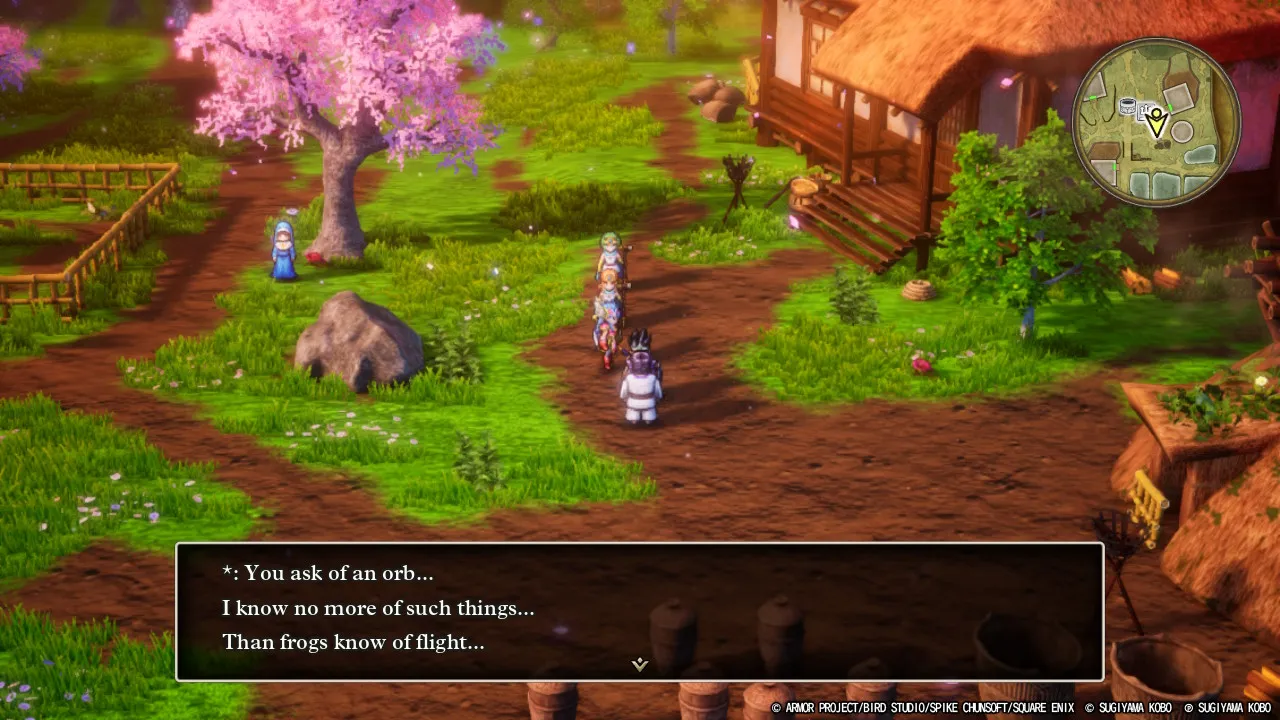
*: You ask of an orb… I know no more of such things… Than frogs know of flight…
🗣️ 現代英語: “You’re asking about an orb? I know about as much about that as frogs know about flying — which is to say, nothing.”
対訳: 「オーブのことかい……。そんなもの、カエルが空の飛び方を知らんのと同じで、わしは何も知らんよ……。」
- You ask of ~ —
ask ofは古風で「〜について尋ねる」。現代はask about。 - I know no more of X than Y knows of Z — 重要構文「XについてYがZを知らないのと同程度にしか知らない」=「まったく知らない」。
no more ... than ...(クジラ構文)の応用。A whale is no more a fish than a horse is.と同型。 - frogs know of flight — カエルは飛べない=「知りようがない」ことの比喩。
02
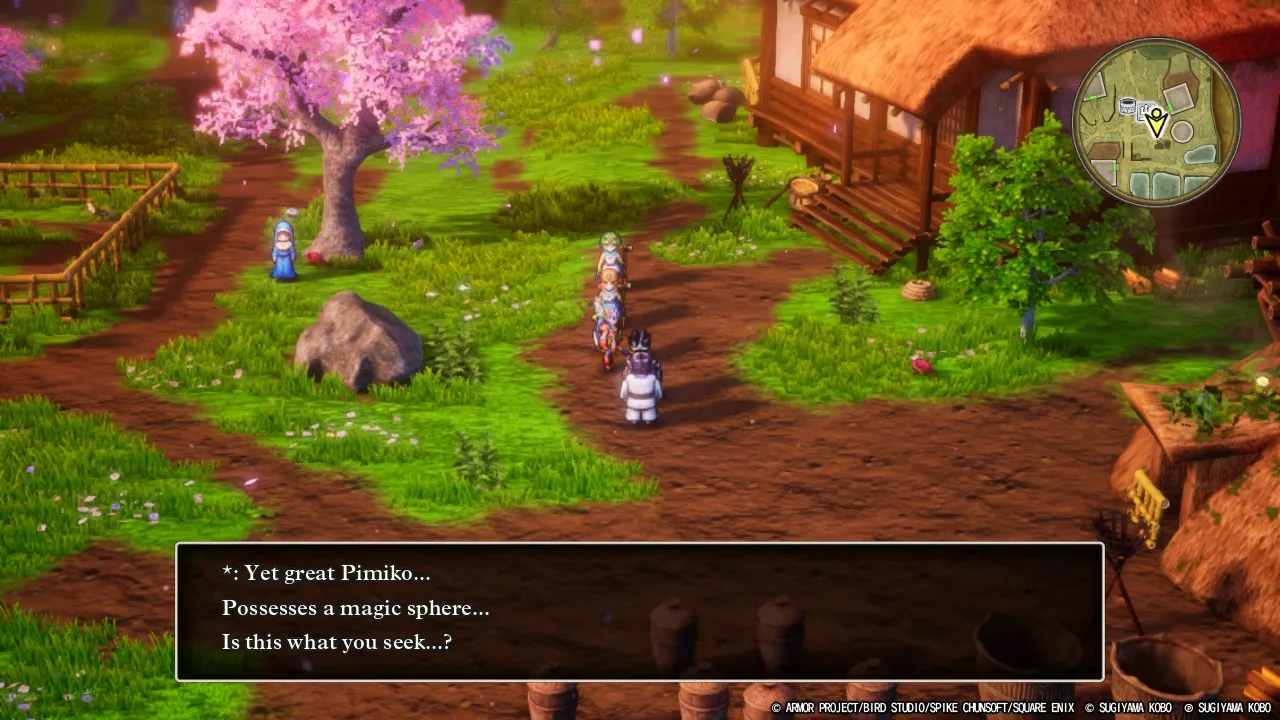
*: Yet great Pimiko… Possesses a magic sphere… Is this what you seek…?
🗣️ 現代英語: “But the great Pimiko has a magic sphere. Is that what you’re looking for?”
対訳: 「だが偉大な卑弥呼様なら、不思議な珠をお持ちだ……。お前さんが探しているのはそれかね……?」
- yet — 文頭で逆接「だが・とはいえ」(= but/however)。
- possess — 「所有する」(= have) のフォーマル語。
- sphere — 「球体」。ここでは orb(オーブ)の言い換え。
- seek — 「探し求める」(= look for) の文語。活用は
seek–sought–sought。
03
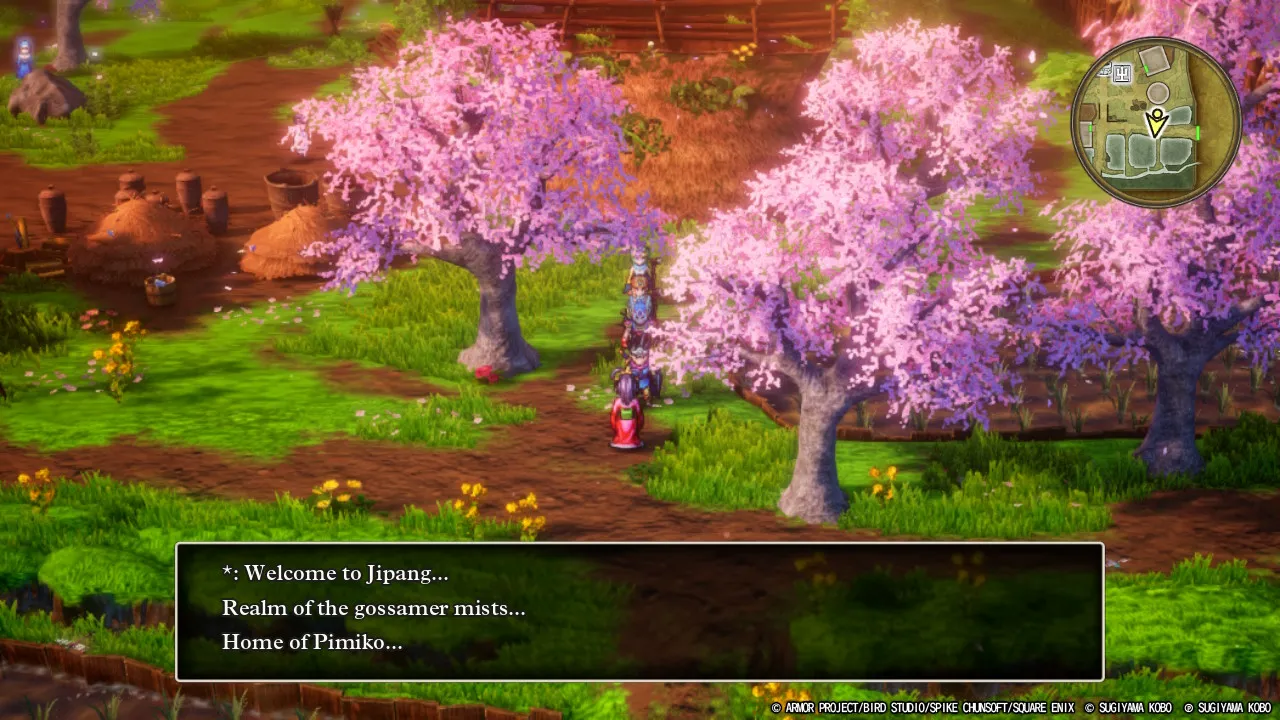
*: Welcome to Jipang… Realm of the gossamer mists… Home of Pimiko…
🗣️ 現代英語: “Welcome to Jipang, the land of thin, drifting mists, where Pimiko lives.”
対訳: 「ようこそジパングへ……。薄絹のような霞の国……卑弥呼様の御座す地へ……。」
- realm — 「王国・領域」。
worldの格調高い言い換え。 - gossamer — 「(クモの糸のように)極めて薄く繊細な」。
gossamer mists=薄霞。詩・文学頻出の美語。 - mists — 霞・もや。複数形で情景の広がりを出す。
Scene 2 — 生贄の風習
04
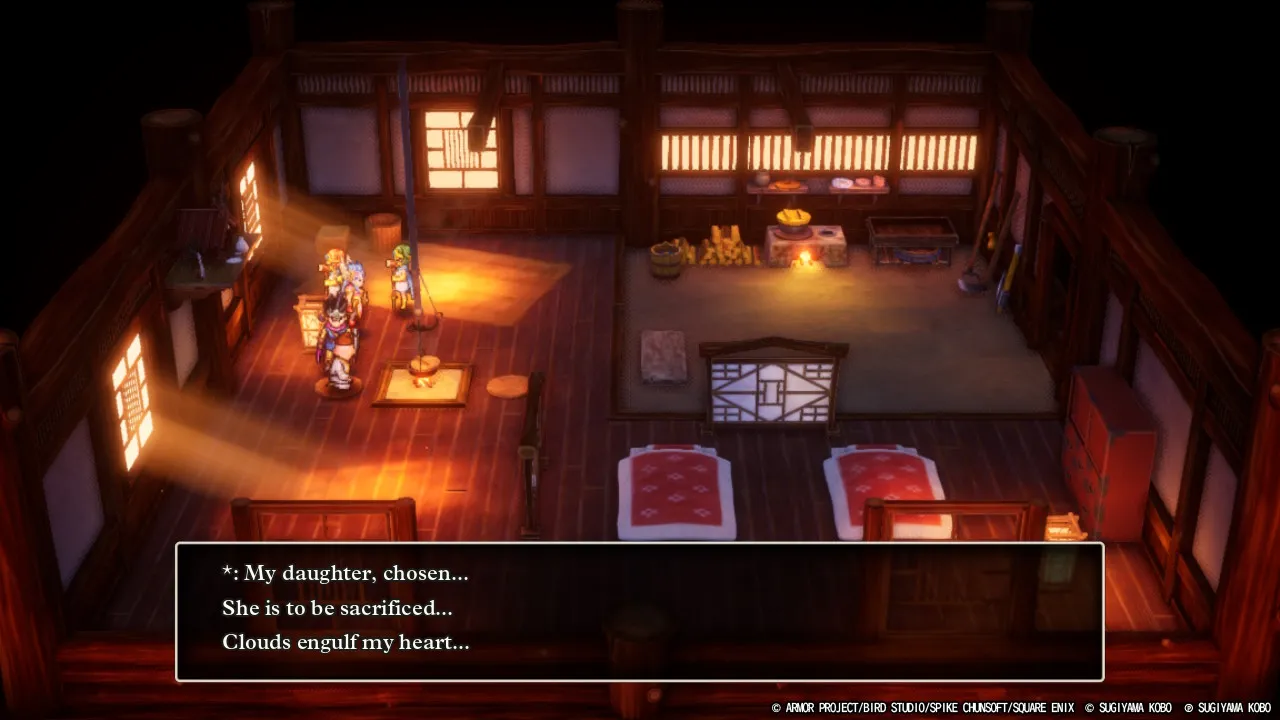
*: My daughter, chosen… She is to be sacrificed… Clouds engulf my heart…
🗣️ 現代英語: “My daughter has been chosen. She’s going to be sacrificed. My heart is overwhelmed with grief.”
対訳: 「娘が選ばれてしまった……。生贄に捧げられるのだ……。胸が暗雲に呑まれるようだ……。」
- chosen — 後置の過去分詞(= my daughter, who has been chosen)。詩的な省略。
- be to be sacrificed —
be to do「〜することになっている(運命・予定)」+受動。「生贄にされる定め」。 - Clouds engulf my heart — 比喩「暗雲が心を呑み込む」。
engulf=「(波・炎などが)すっぽり包み込む・呑み込む」。
05
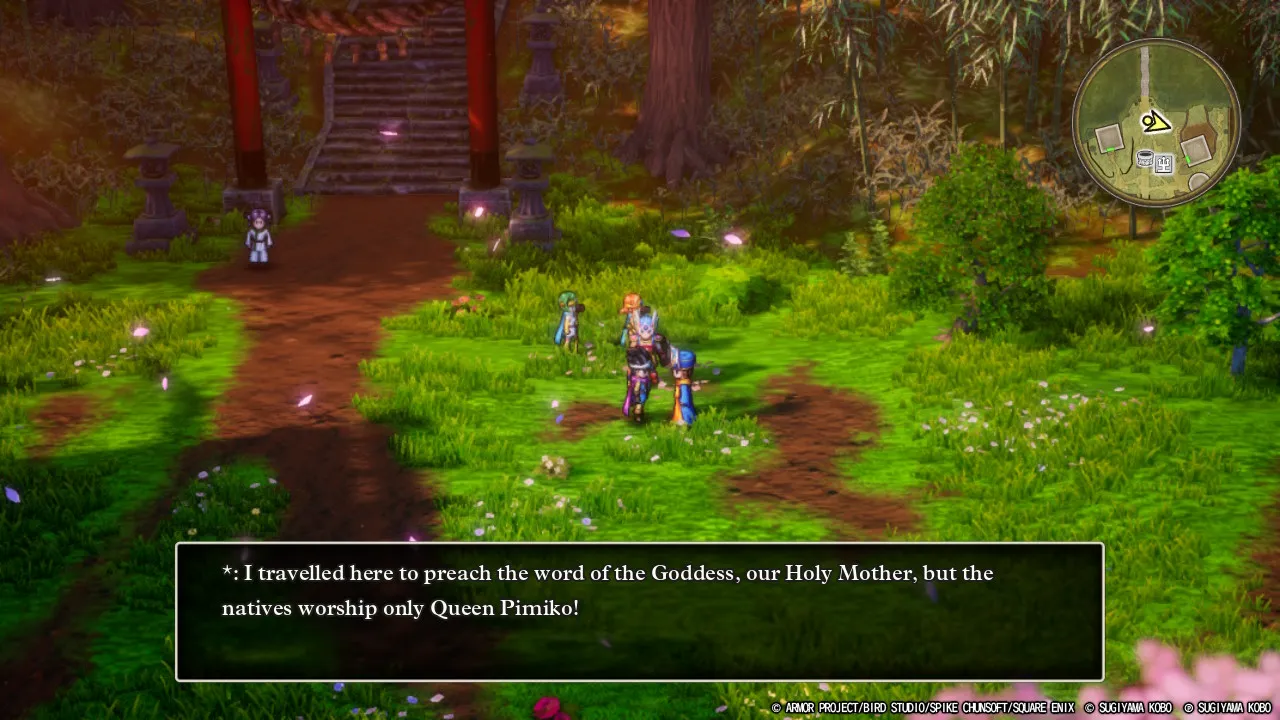
*: I travelled here to preach the word of the Goddess, our Holy Mother, but the natives worship only Queen Pimiko!
🗣️ 現代英語: “I came here to spread the teachings of the Goddess, our Holy Mother, but the locals worship only Queen Pimiko!”
対訳: 「我らが聖母なる女神の教えを説きに参ったのに、土地の者は卑弥呼女王ばかりを崇めておる!」
- preach the word of ~ — 「〜の教え(福音)を説く」。
the Word=聖書的に「神の言葉」。宣教師的な言い回し。 - natives — 「土地の人・原住民」。⚠️文脈により失礼にもなる語。ここは宣教師目線の表現。
- worship — 「崇拝する」。
06
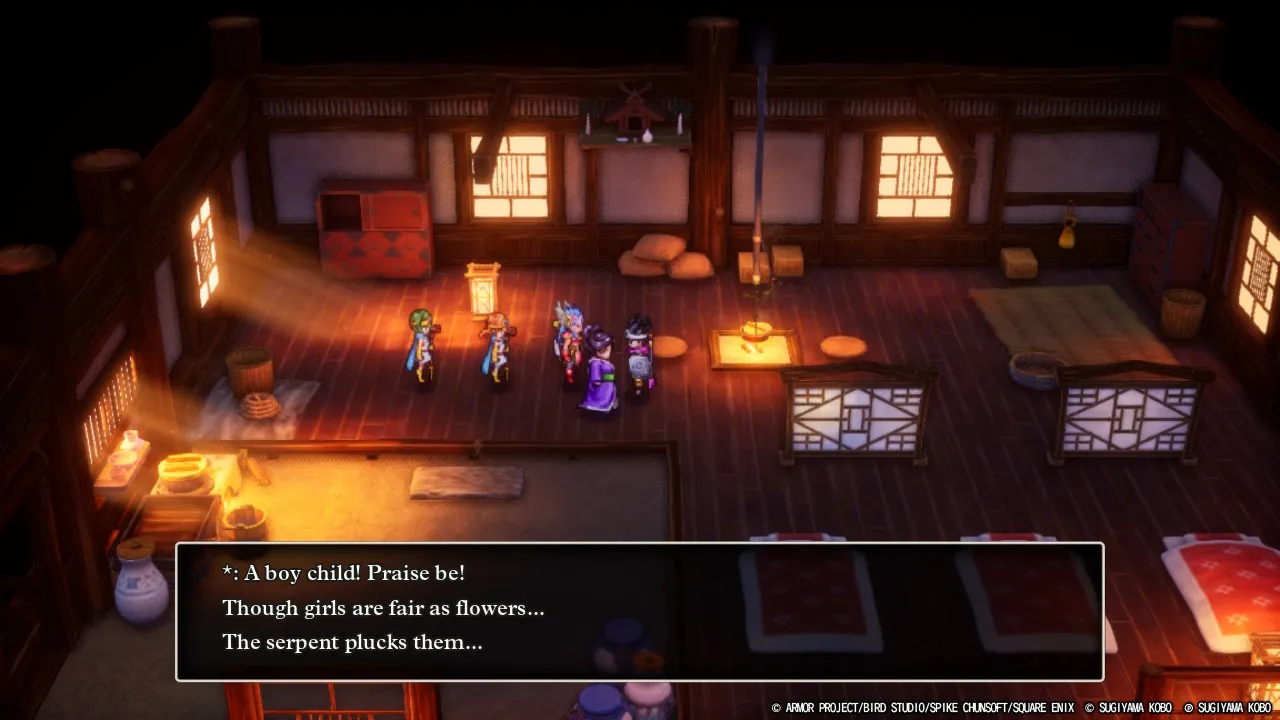
*: A boy child! Praise be! Though girls are fair as flowers… The serpent plucks them…
🗣️ 現代英語: “A baby boy! Thank goodness! Girls may be as pretty as flowers, but the serpent snatches them away.”
対訳: 「男の子だ! ありがたや! 女の子は花のように愛らしいが……あの大蛇に摘み取られてしまうからな……。」
- Praise be! — 「ありがたや!/神に感謝を」。
Praise be (to God)の省略。安堵・感謝の感嘆。 - fair as flowers —
fair=古語「美しい」。頭韻(f-f)を踏んだ詩的表現。 - pluck — 「(花を)摘む」→ここでは「(娘を)さらう・もぎ取る」。生贄の暗喩。
Scene 3 — 卑弥呼の宮殿
07
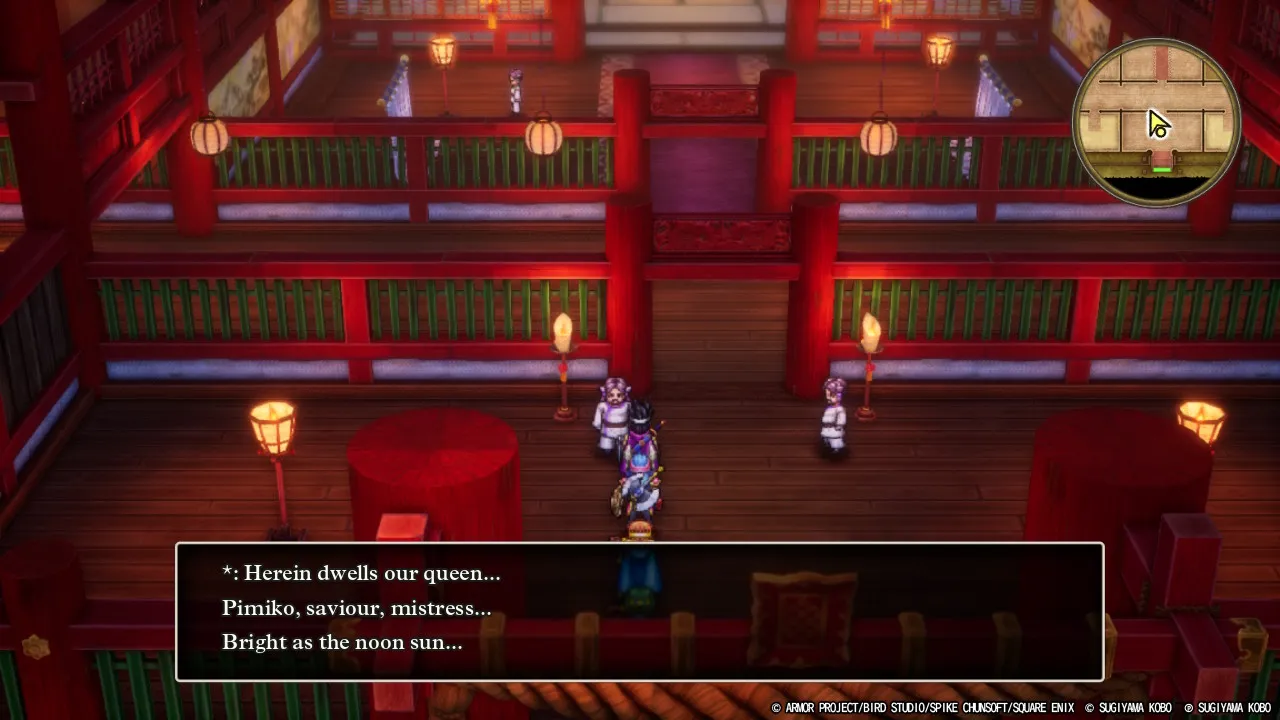
*: Herein dwells our queen… Pimiko, saviour, mistress… Bright as the noon sun…
🗣️ 現代英語: “This is where our queen lives — Pimiko, our saviour and mistress, as bright as the midday sun.”
対訳: 「ここに女王様がおわす……。救い主にして主、卑弥呼様……。真昼の陽のように輝かしい御方……。」
- herein — 古語「この中に・ここに」(= in here)。
herein/therein/whereinの語族。 - dwell — 「住む・宿る」(= live) の文語。
dwell–dwelt–dwelt。 - mistress — ここでは「女主人・支配者(女性)」。⚠️「愛人」の語義もあるので文脈注意。
- Bright as the noon sun — 直喩。
noon=正午。
08
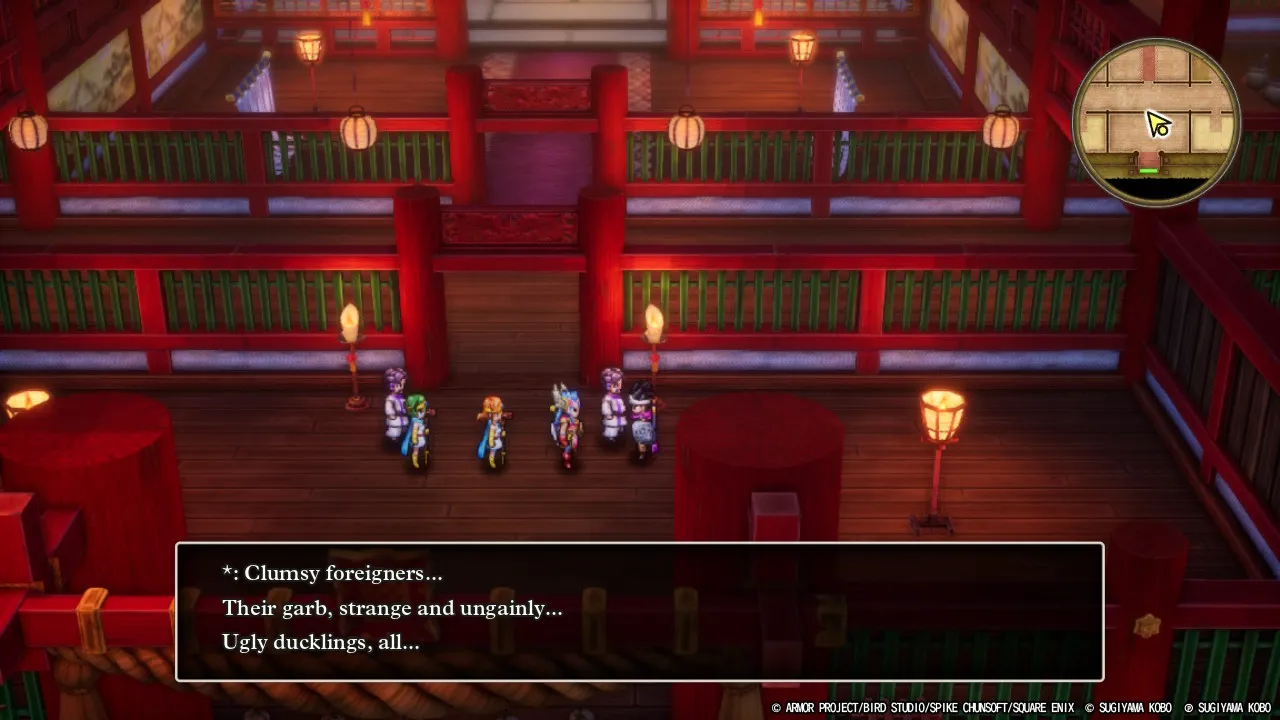
*: Clumsy foreigners… Their garb, strange and ungainly… Ugly ducklings, all…
🗣️ 現代英語: “Clumsy foreigners. Their clothes are strange and awkward-looking. They’re all like ugly ducklings.”
対訳: 「不器用なよそ者ども……。その装い、奇妙で野暮ったい……。皆そろって醜いアヒルの子よ……。」
- garb — 「衣装・身なり」。やや古風・文語。
- ungainly — 「不格好な・ぎこちない」。
gainly(優美な)はほぼ廃語で、否定形だけが生き残った語。 - Ugly ducklings, all — 後置の
all=「みな揃って」。ugly ducklingはアンデルセン童話由来のイディオム「(今は)見栄えしないが将来化ける者/のけ者」。ここは見下しのニュアンス。
09
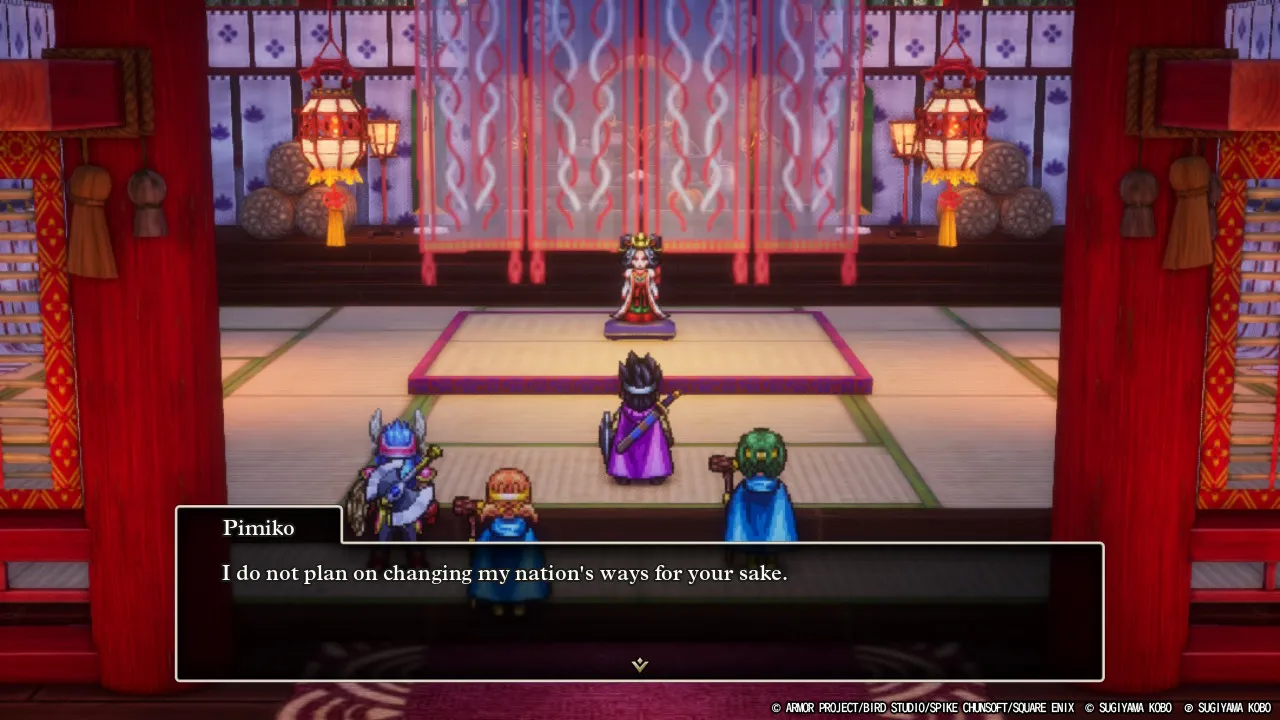
Pimiko: I do not plan on changing my nation’s ways for your sake.
🗣️ 現代英語: “I’m not going to change my country’s customs just for you.”
対訳: 「そなたのために、我が国のやり方を変えるつもりはない。」
- plan on doing — 「〜するつもりだ」。
plan to doとほぼ同義の口語。 - ways — (複数形で)「やり方・風習・流儀」。
a nation's ways=国の慣習。 - for your sake — 「あなたのために」。
for the sake of ~「〜のため・〜の利益を思って」。
10
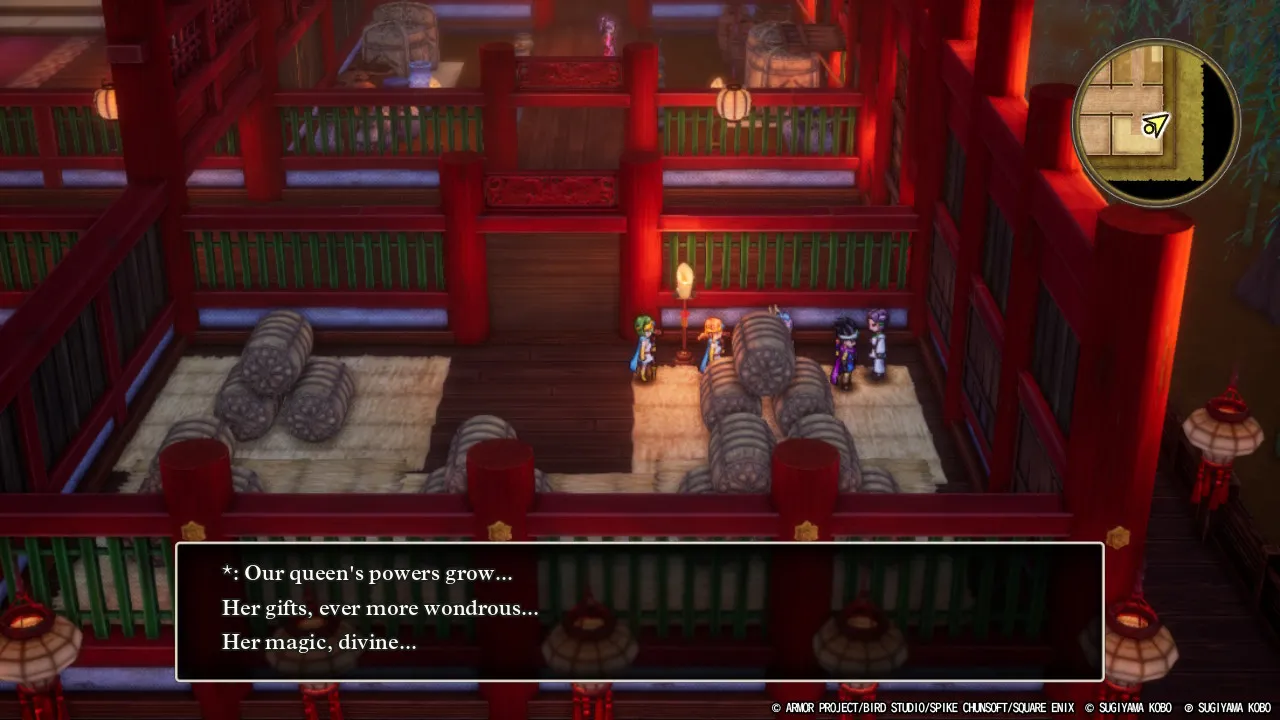
*: Our queen’s powers grow… Her gifts, ever more wondrous… Her magic, divine…
🗣️ 現代英語: “Our queen’s powers keep growing. Her talents get more and more amazing. Her magic is divine.”
対訳: 「女王様の力は増すばかり……。その才はますます驚異的に……。その魔法はまさに神々しい……。」
- gifts — ここでは「才能・天賦の力」(= talents)。
a gift for ~「〜の才」。 - ever more wondrous —
ever more=「いよいよ・ますます」。wondrous=「驚異的な」の詩語(= wonderful)。 - divine — 「神の・神々しい」。
11
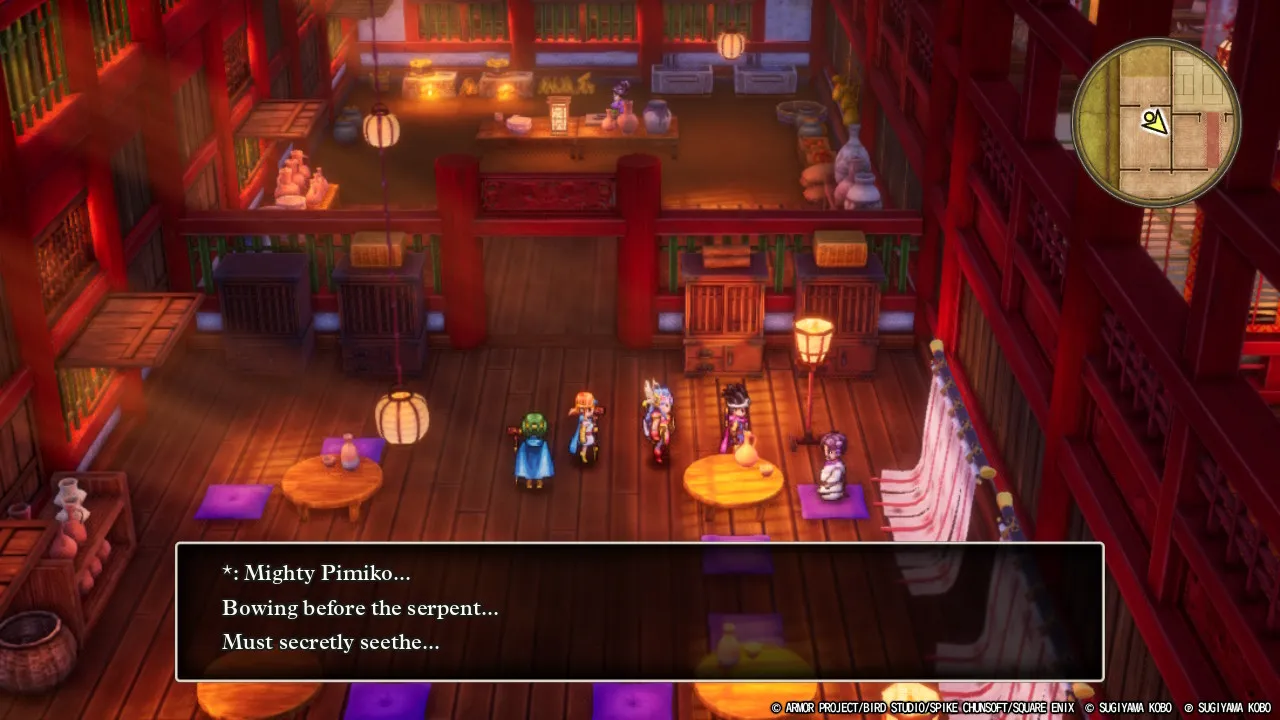
*: Mighty Pimiko… Bowing before the serpent… Must secretly seethe…
🗣️ 現代英語: “The mighty Pimiko, having to bow before the serpent, must be secretly boiling with anger.”
対訳: 「偉大な卑弥呼様も……あの大蛇に頭を垂れるとは……内心では煮えくり返っておられよう……。」
- 主語+動詞の省略 — 完全文なら Mighty Pimiko, (who is) bowing…, must secretly seethe. 詩的断片。
- bow before ~ — 「〜の前にひれ伏す・服従する」。
- seethe — 「(怒りで)煮えくり返る・腹の中で激怒する」。元義「(液体が)沸き立つ」→感情の比喩。
seethe with anger/rage。
12
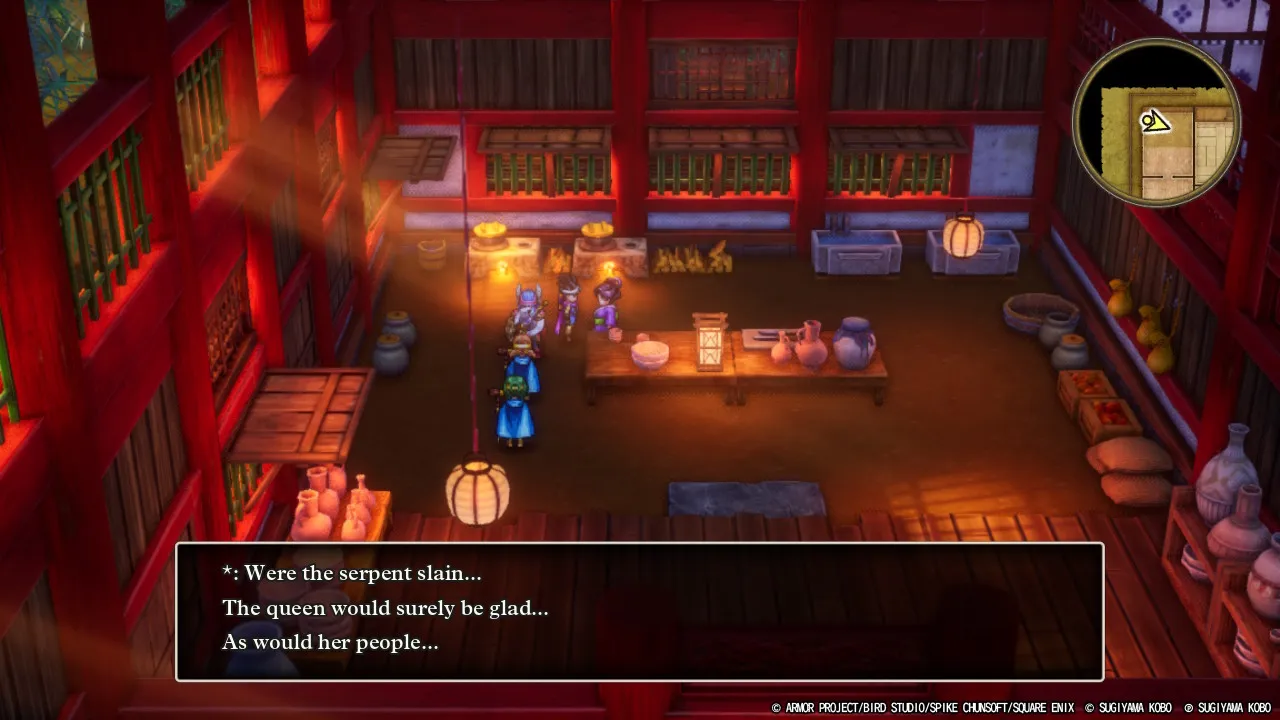
*: Were the serpent slain… The queen would surely be glad… As would her people…
🗣️ 現代英語: “If the serpent were killed, the queen would surely be glad — and so would her people.”
対訳: 「あの大蛇さえ討たれれば……女王様もさぞお喜びになろう……民も同じく……。」
- Were the serpent slain — 仮定法の倒置。
If the serpent were slainのifを省いてwereを文頭に。上級頻出(cf.Were I you.../Had I known...)。 - slain —
slay(殺す・討つ)の過去分詞。slay–slew–slain。荘重・文語。 - As would her people —
so would her peopleと同義の倒置「民もまたそうであろう」。as+助動詞+主語。
Scene 4 — ヤヨイの告白(生贄の娘)
13
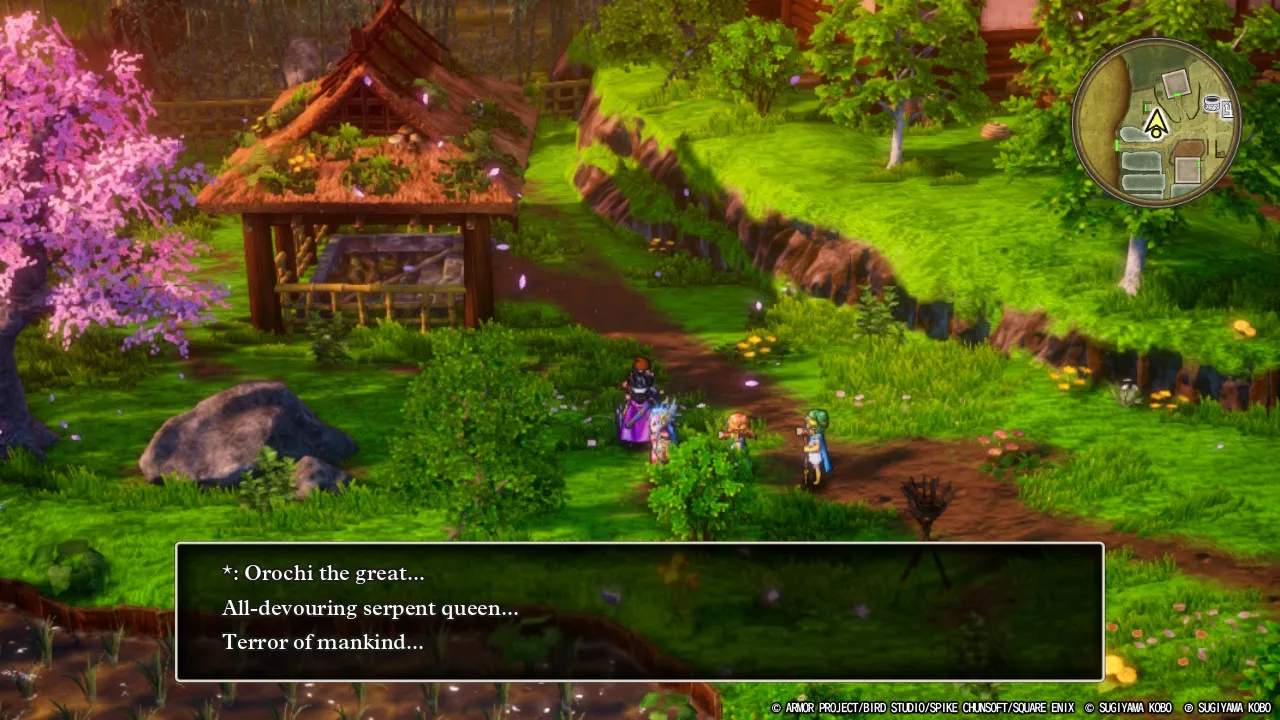
*: Orochi the great… All-devouring serpent queen… Terror of mankind…
🗣️ 現代英語: “The great Orochi — the all-devouring serpent queen, the terror of humankind.”
対訳: 「偉大なるオロチ……すべてを喰らう蛇の女王……人類の恐怖……。」
- Orochi the great — 名詞+
the + 形容詞の称号後置(cf. Alexander the Great)。 - all-devouring — 「すべてを喰らい尽くす」。
all-+現在分詞の複合形容詞(cf.all-knowing全知の)。devour=むさぼり食う。 - terror of mankind —
terror of ~「〜にとっての恐怖の的・脅威」。
14
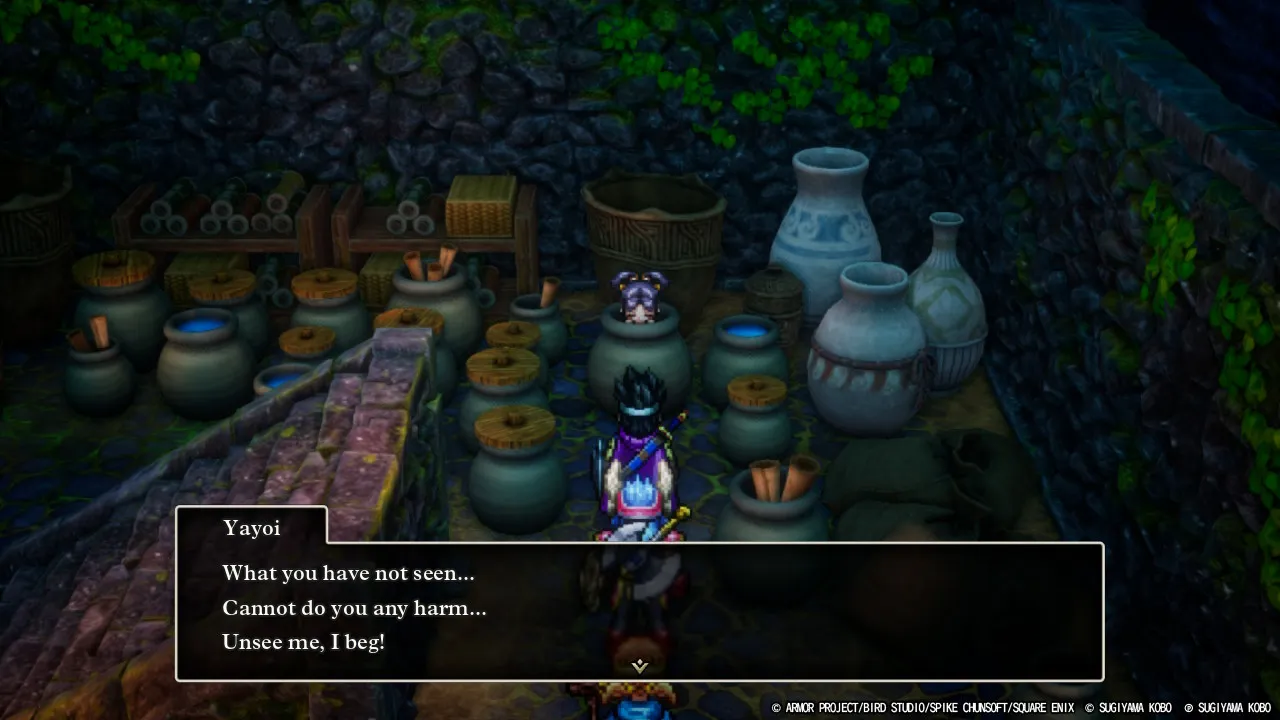
Yayoi: What you have not seen… Cannot do you any harm… Unsee me, I beg!
🗣️ 現代英語: “What you haven’t seen can’t hurt you. Please, pretend you never saw me — I’m begging you!”
対訳: 「見ていないものは……あなたを害せない……。お願い、私を見なかったことにして!」
- do you any harm —
do + 人 + harm「(人に)害を与える」。It won't do you any harm.(害にはならないよ)の二重目的語構文。 - Unsee — 「見たことを取り消す」造語的動詞。本来は不可能なので「見なかったことにして」のニュアンス。
un-+動詞の遊び(cf. ネットスラング can’t unsee)。 - I beg! — 「お願いだから!」。
beg=懇願する。
15
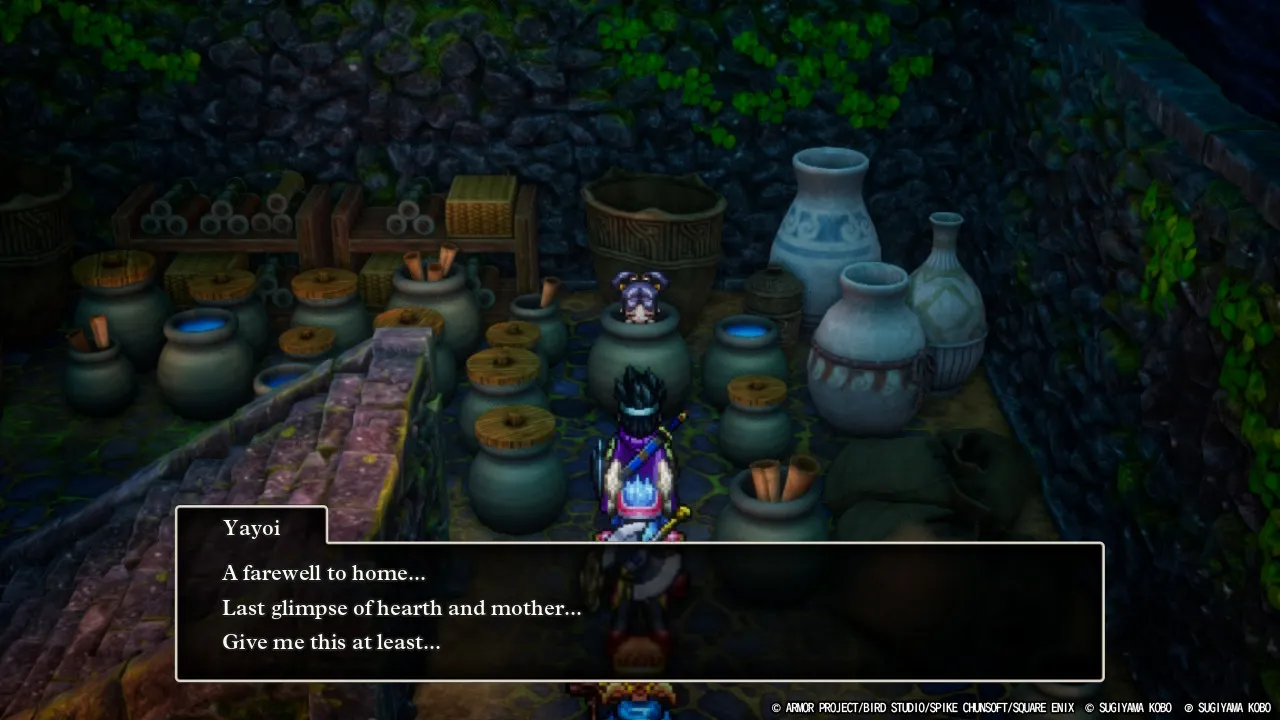
Yayoi: A farewell to home… Last glimpse of hearth and mother… Give me this at least…
🗣️ 現代英語: “Let me say goodbye to my home — one last look at my family and my mother. Give me at least that much.”
対訳: 「家への別れを……。竈(かまど)と母を見るのもこれが最後……。せめてそれだけは許して……。」
- farewell — 「別れ(の挨拶)」。
bid farewell to ~「〜に別れを告げる」。 - glimpse — 「ちらりと見ること・垣間見」。
catch a glimpse of ~。 - hearth — 「炉端・暖炉」→転じて「家庭・我が家」の象徴。
hearth and homeは定型句。発音は /hɑːθ/(h は無音ではない、heartとは別語)。 - at least — 「せめて・少なくとも」。
16
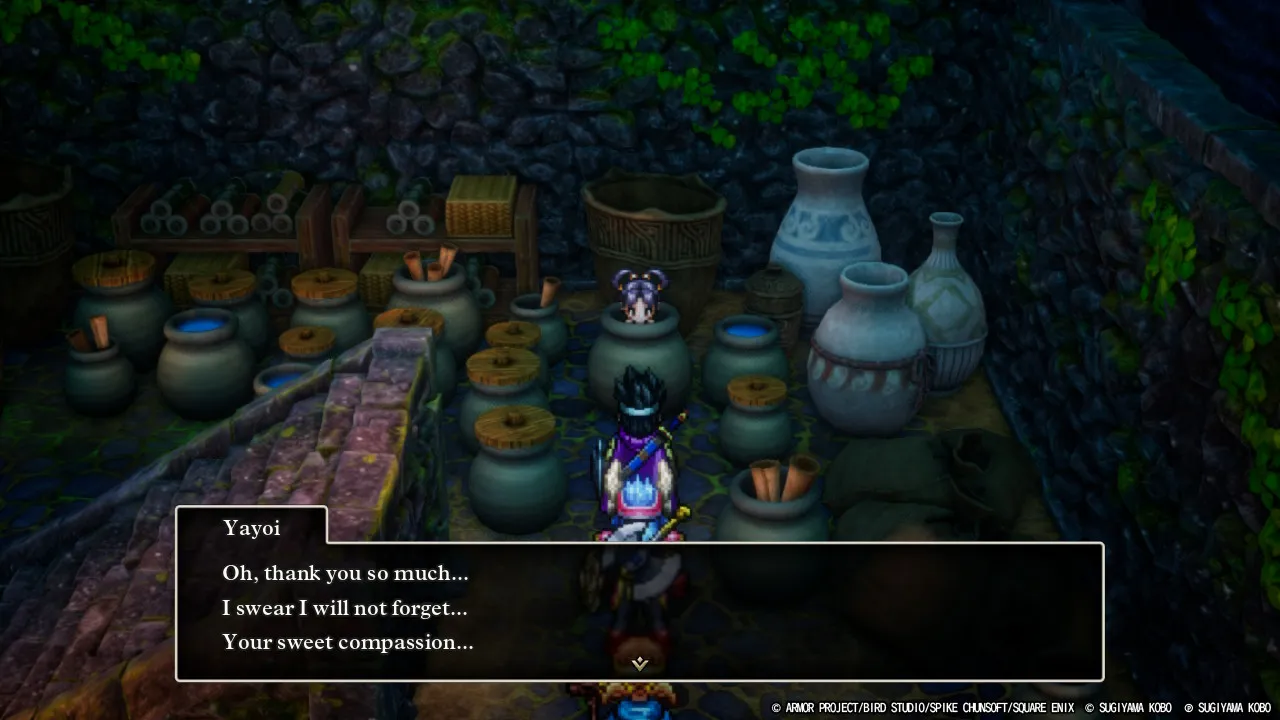
Yayoi: Oh, thank you so much… I swear I will not forget… Your sweet compassion…
🗣️ 現代英語: “Oh, thank you so much. I promise I’ll never forget your kindness.”
対訳: 「ああ、本当にありがとう……。決して忘れません……あなたの優しい慈悲を……。」
- I swear (that) ~ — 「誓って〜する」。強い約束。
- compassion — 「思いやり・憐れみ・慈悲」。
com-(共に)+passion(苦しみ)=「共に苦しむ心」が語源。
17
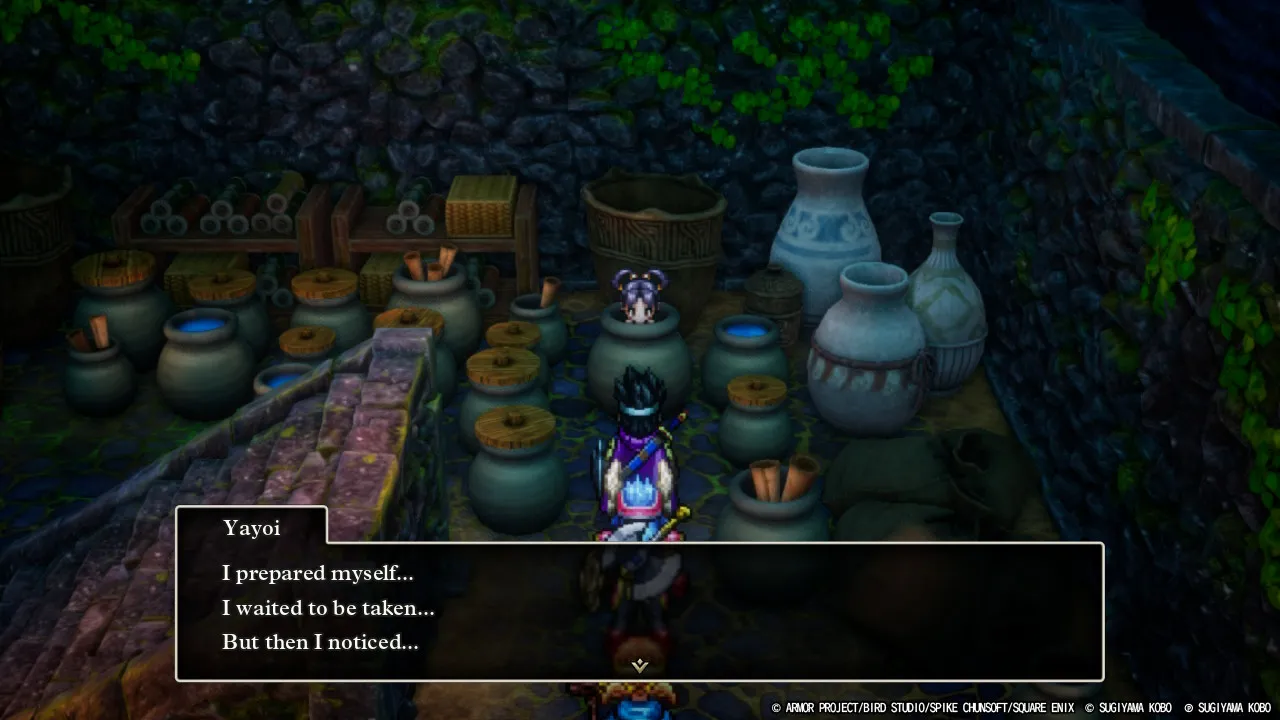
Yayoi: I prepared myself… I waited to be taken… But then I noticed…
🗣️ 現代英語: “I braced myself. I waited to be taken away. But then I noticed something…”
対訳: 「覚悟を決めて……連れて行かれるのを待っていた……。でも、そのとき気づいたの……。」
- prepare oneself — 「心の準備をする・覚悟する」。
- waited to be taken —
wait to be + 過去分詞「〜されるのを待つ」。受動の不定詞。taken=(生贄として)連れ去られる。
18
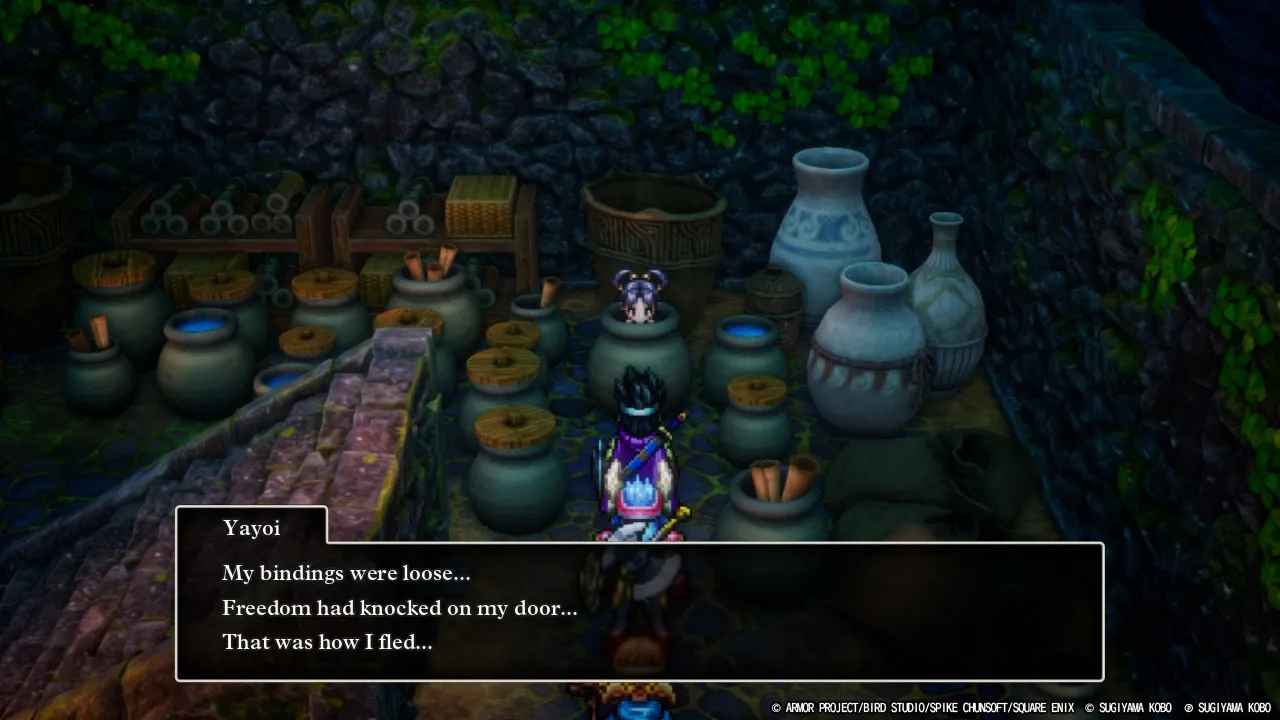
Yayoi: My bindings were loose… Freedom had knocked on my door… That was how I fled…
🗣️ 現代英語: “My ropes were loose. An opportunity to escape had presented itself. That’s how I ran away.”
対訳: 「縛(いまし)めが緩んでいた……。自由が扉を叩いたのよ……。そうして私は逃げ出した……。」
- bindings — 「縛るもの・縄目」。
bind(縛る)+-ingの名詞。bind–bound–bound。 - Freedom had knocked on my door — 擬人化の比喩「自由が戸を叩いた」=逃げる好機が訪れた。
opportunity knocks(好機が訪れる)の応用。had + 過去分詞は過去完了(逃げる前の時点)。 - fled —
flee(逃げる)の過去形。flee–fled–fled。⚠️flee(逃げる) とflow(流れる)/fly(飛ぶ)を混同しない。
19
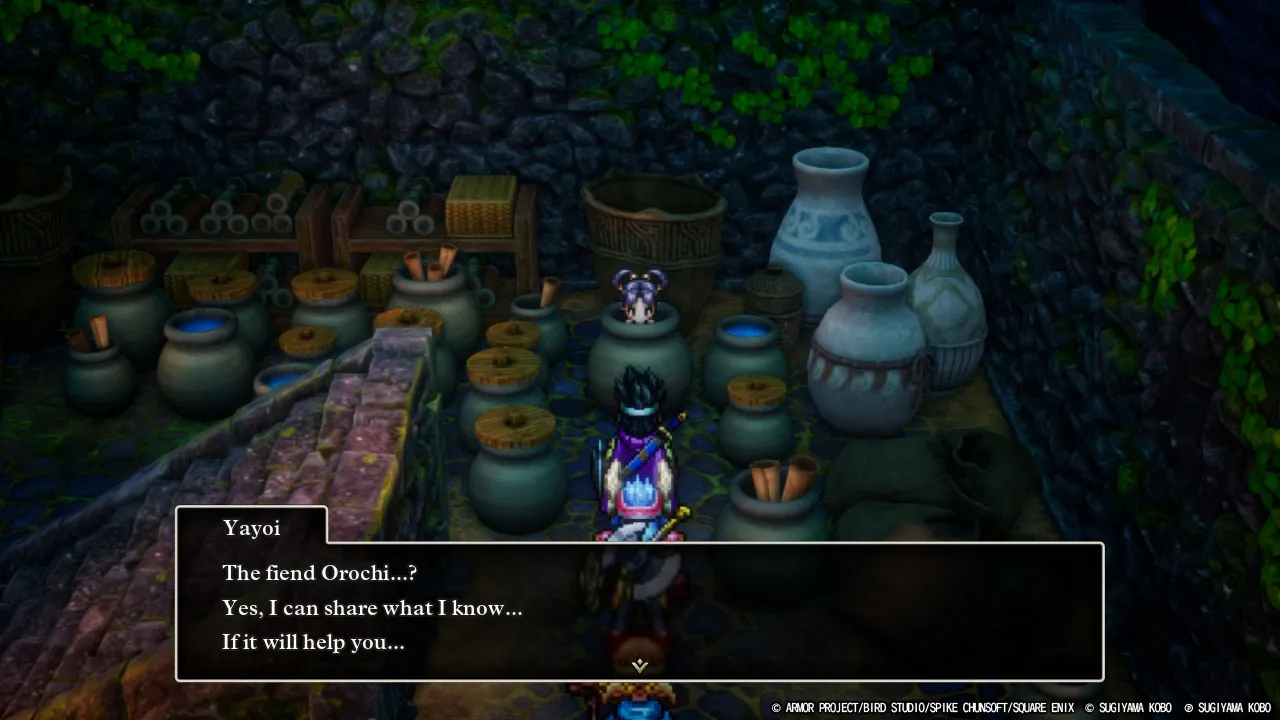
Yayoi: The fiend Orochi…? Yes, I can share what I know… If it will help you…
🗣️ 現代英語: “The monster Orochi? Yes, I can tell you what I know, if it’ll help you.”
対訳: 「悪鬼オロチのこと……? ええ、知っていることをお話しします……。お役に立てるなら……。」
- fiend — 「悪鬼・極悪人」。発音 /fiːnd/(「フィーンド」)。
the Fiend=悪魔。a fiend for ~「〜マニア」の口語義もある。 - share what I know —
share=(情報を)「教える・共有する」。what I know(知っていること)は関係代名詞 what の名詞節。
20
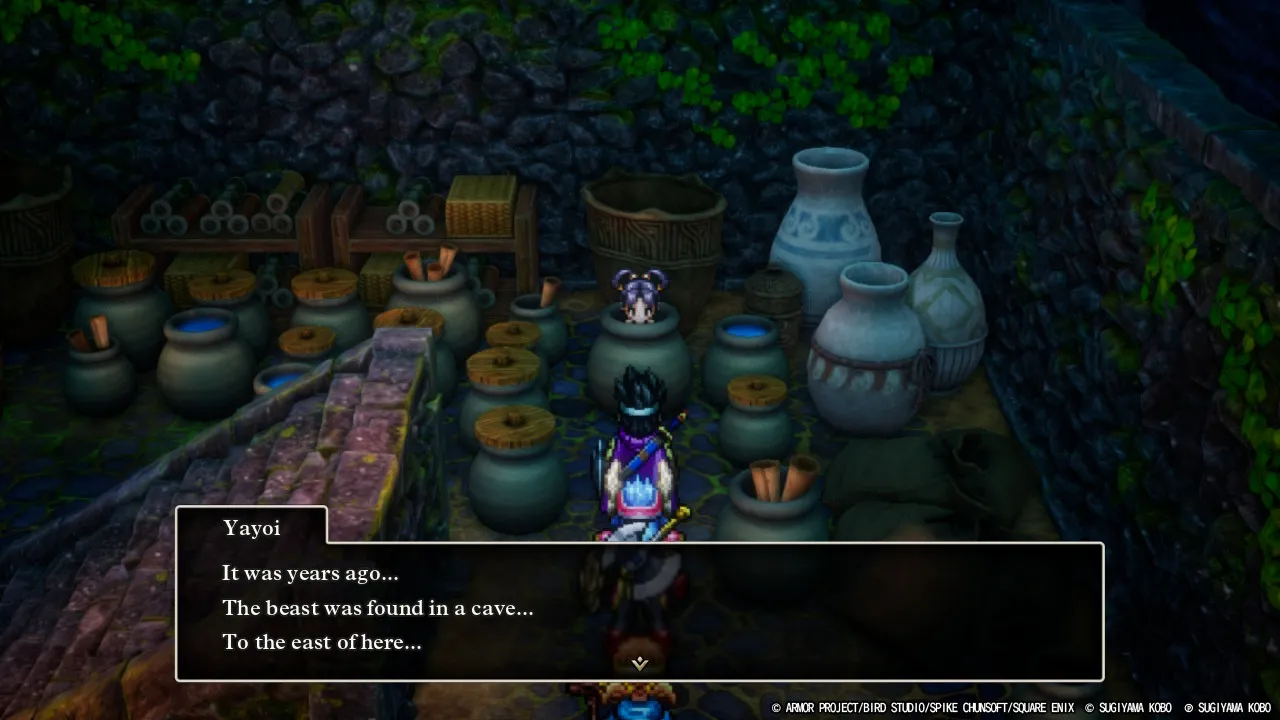
Yayoi: It was years ago… The beast was found in a cave… To the east of here…
🗣️ 現代英語: “It was years ago. The beast was discovered in a cave to the east of here.”
対訳: 「もう何年も前のこと……。あの獣は洞窟で見つかったの……。ここから東の……。」
- years ago — 「何年も前」。
yearsの複数で漠然と長い年月。 - beast — 「獣・けだもの」。
monsterより野性的・聖書的な響き。 - to the east of ~ — 「〜の東方に」。方角+
of。
21
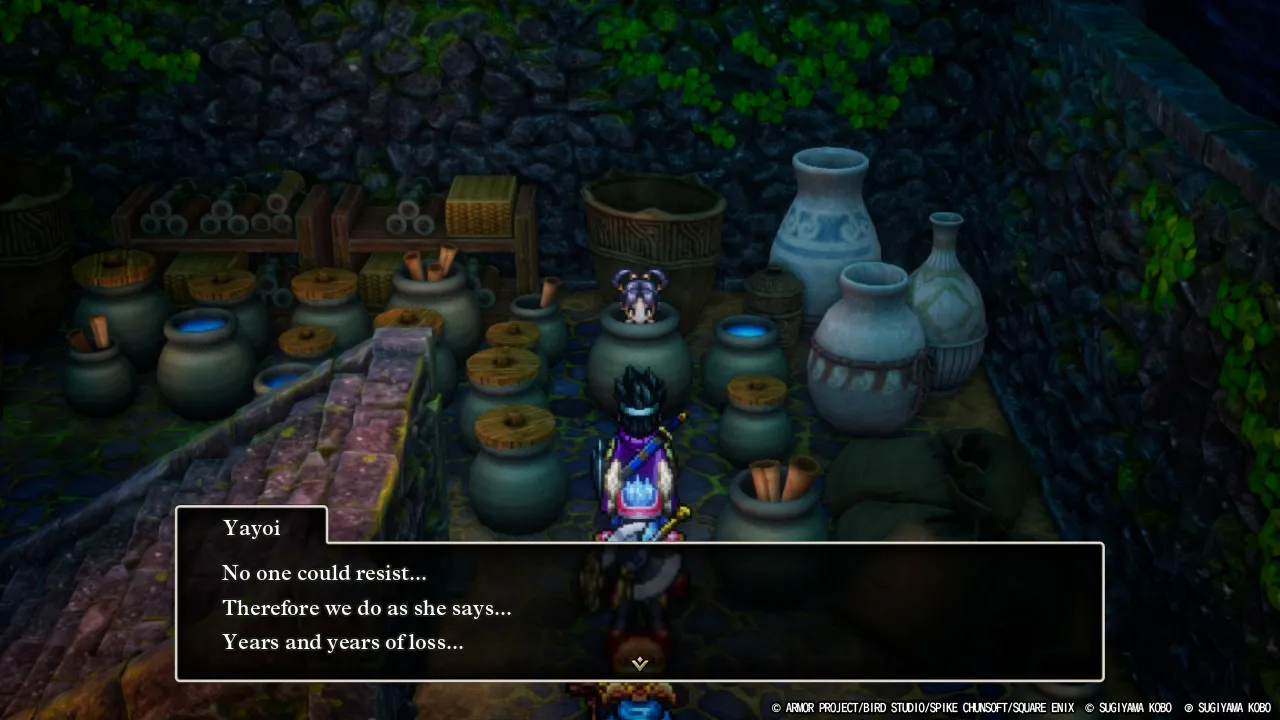
Yayoi: No one could resist… Therefore we do as she says… Years and years of loss…
🗣️ 現代英語: “No one could fight back, so we do whatever she says. It’s been years and years of loss.”
対訳: 「誰も抗えなかった……。だから皆、言いなりになっている……。失い続けた長い長い歳月……。」
- resist — 「抵抗する・抗う」。
- therefore — 「それゆえ」。論理的帰結を示す副詞(フォーマル)。
- do as she says —
do as ~ says「〜の言うとおりにする」。asは「〜のように・〜のとおり」。 - Years and years of ~ — 同語反復で「長年の〜」を強調。
loss=喪失(犠牲者を失い続けたこと)。
22
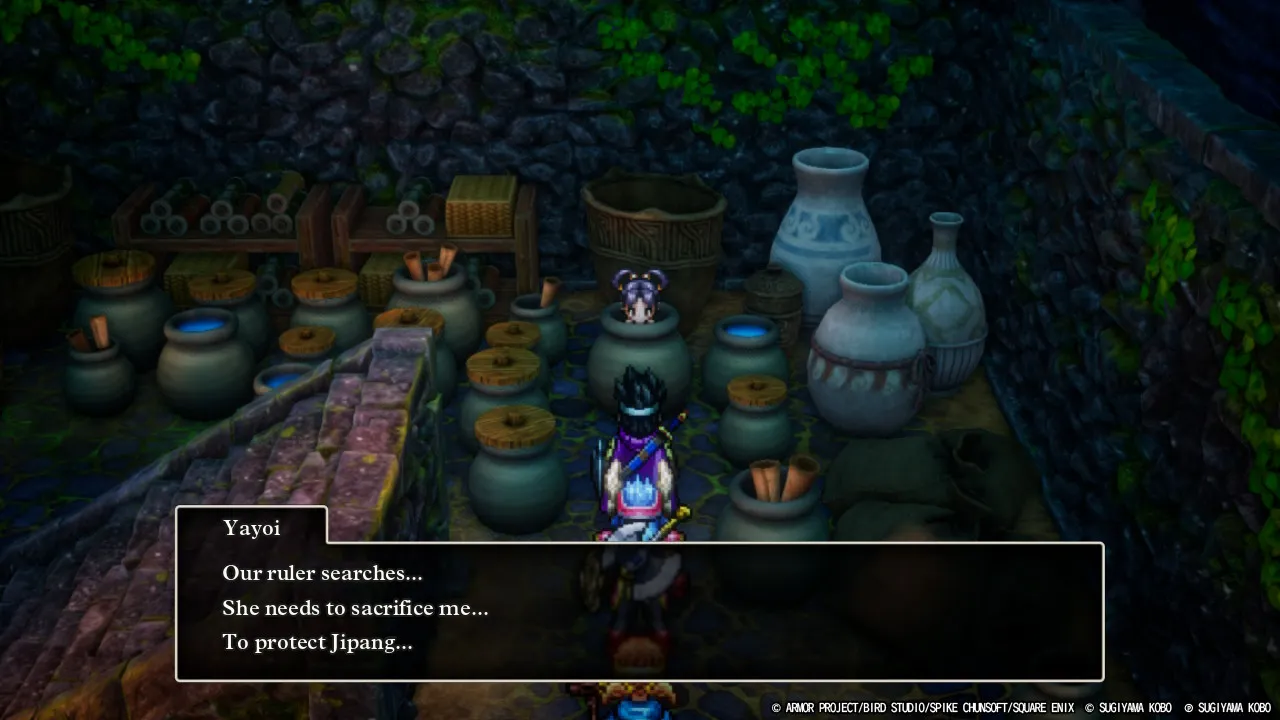
Yayoi: Our ruler searches… She needs to sacrifice me… To protect Jipang…
🗣️ 現代英語: “Our ruler is searching for me. She needs to sacrifice me to protect Jipang.”
対訳: 「女王様は私を捜している……。私を生贄にしなければならないの……。ジパングを守るために……。」
- ruler — 「統治者」。
rule(治める)+-er。⚠️「定規」と同綴り異義。 - search — ここは自動詞「捜す」。対象を言うなら
search for me。⚠️search a place(場所を捜索する) とsearch for a thing(物を捜す) の差に注意。 - to protect ~ — 目的の不定詞「〜を守るために」。
23
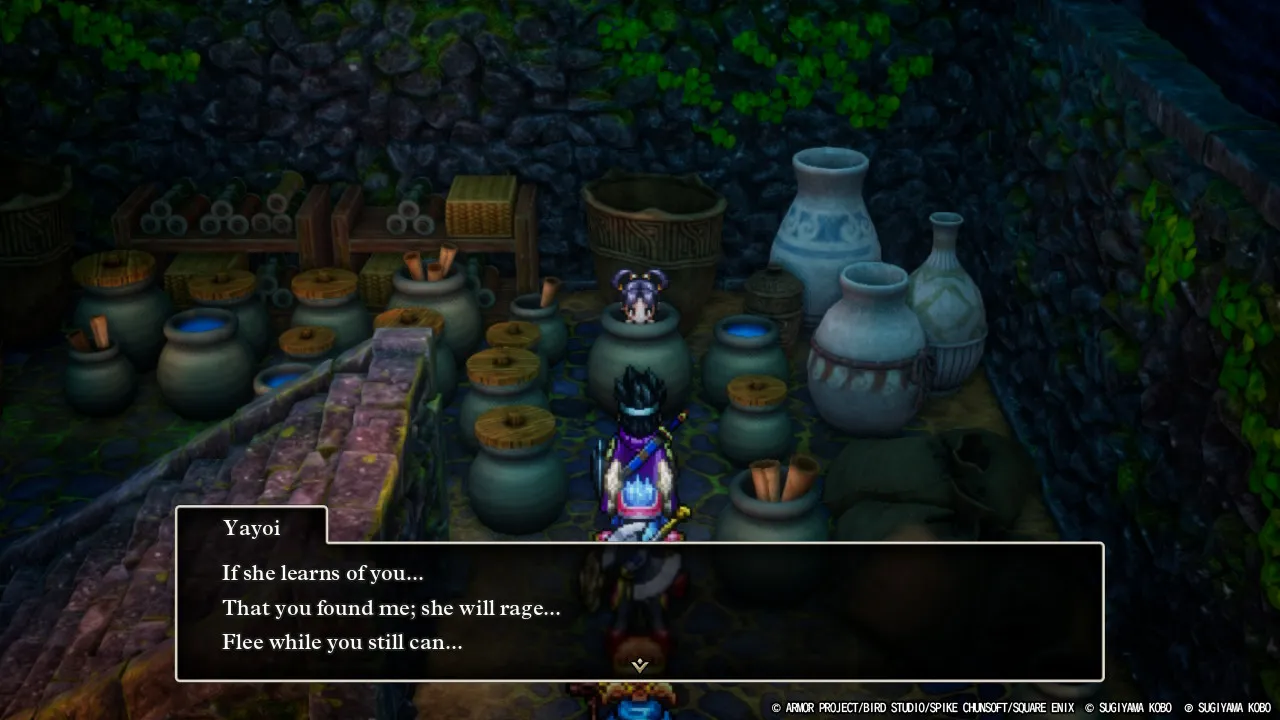
Yayoi: If she learns of you… That you found me; she will rage… Flee while you still can…
🗣️ 現代英語: “If she finds out about you — that you found me — she’ll be furious. Run away while you still can.”
対訳: 「私を見つけたあなたのことが知れたら……女王様は激怒する……。逃げられるうちに逃げて……。」
- learn of ~ — 「〜を知る・耳にする」(= find out about)。
- rage — 動詞「激怒する・荒れ狂う」。名詞「激怒」も。
- Flee while you still can —
flee(逃げる)+while you still can「まだ逃げられるうちに」。緊迫の決まり文句。
24
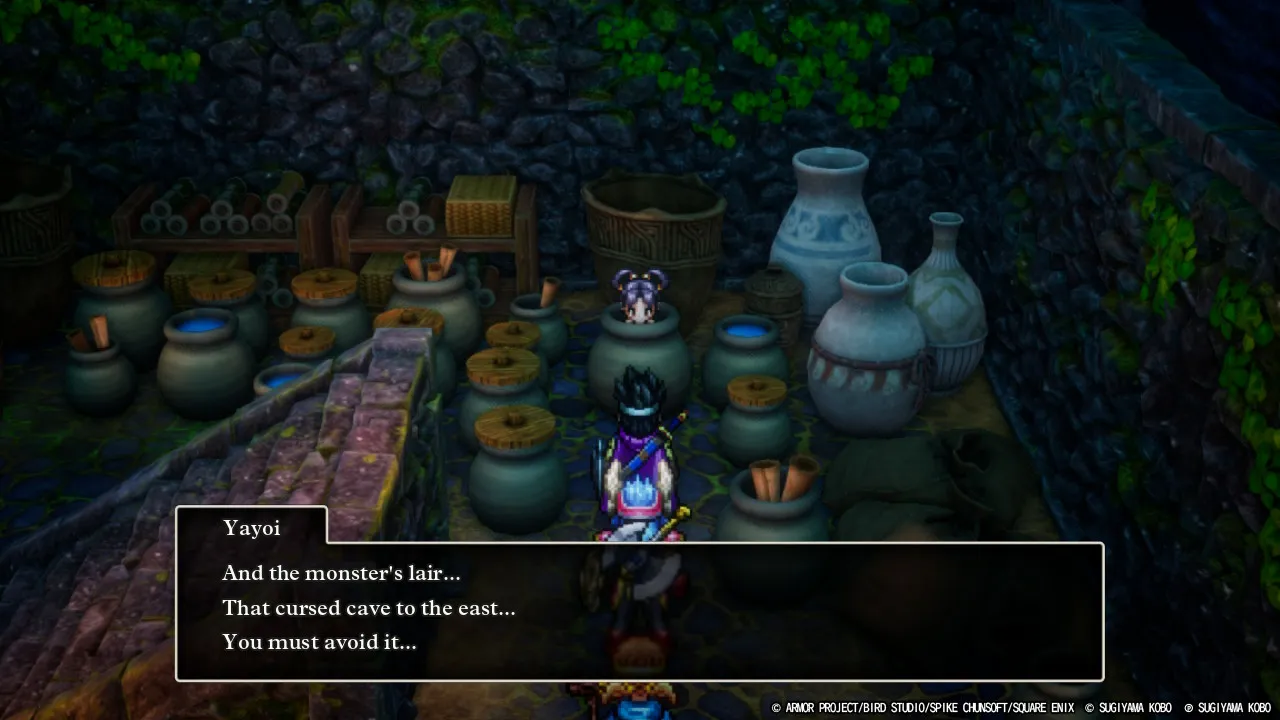
Yayoi: And the monster’s lair… That cursed cave to the east… You must avoid it…
🗣️ 現代英語: “And the monster’s den — that cursed cave to the east — you have to stay away from it.”
対訳: 「それと、あの怪物の棲み処……東にある呪われた洞窟……。決して近づいてはだめ……。」
- lair — 「(野獣・怪物の)巣・棲み処」。発音 /lɛər/。
denより「魔物の住処」感が強い。 - cursed — 「呪われた」。形容詞では2音節 /ˈkɜːrsɪd/ と読むことが多い(動詞過去形 cursed /kɜːrst/ と区別)。
- avoid — 「避ける」。
avoid doing(〜するのを避ける)の語法も重要。
Scene 5 — オロチの洞窟へ
25
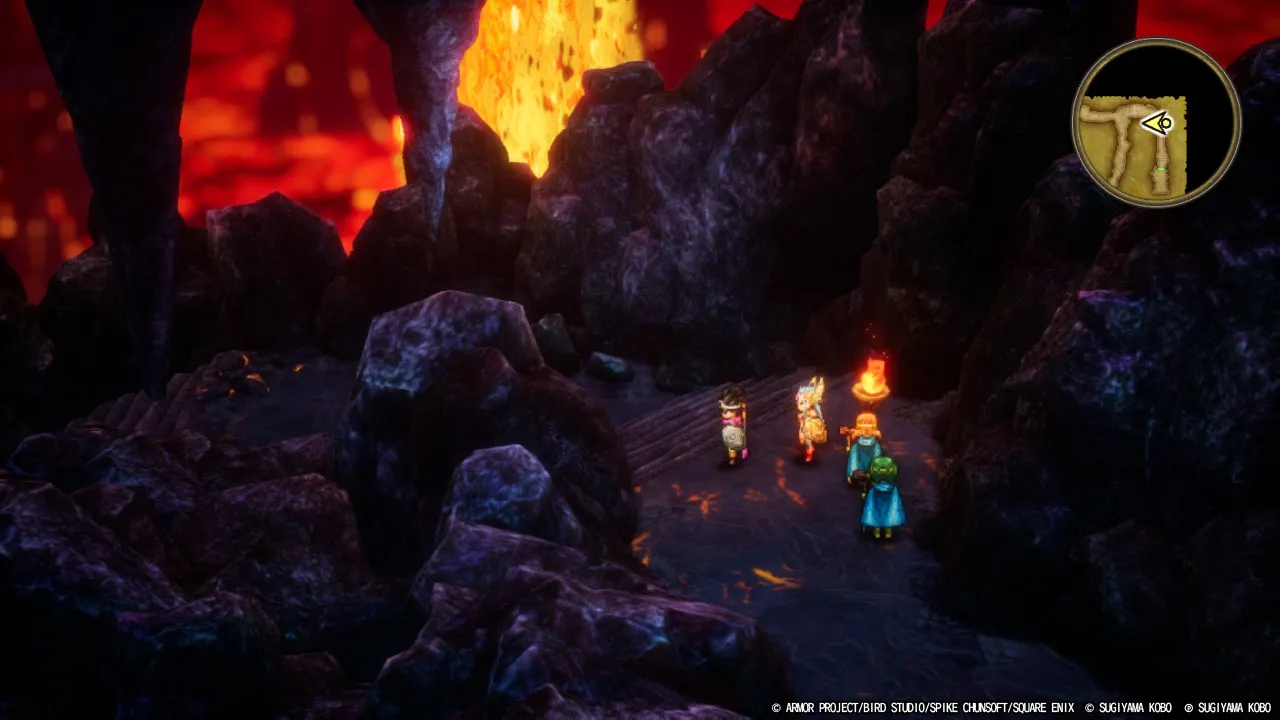
(テキストなし:溶岩の洞窟=オロチの棲む「呪われた洞窟」に足を踏み入れる情景カット。ヤヨイの「避けよ」という忠告に反して向かう=ジパング編(オロチ討伐)へ続く。)
🔑 このシーンの最重要ピックアップ(暗記推奨)
| 表現 | 意味 | 種類 |
|---|---|---|
| no more A than B | AでないのはBでないのと同じ(=全然〜ない) | 構文(クジラ構文) |
| Were S +過去分詞 / Had S +過去分詞 | もし〜なら(仮定法の倒置) | 構文 |
| do + 人 + harm | 〜に害を与える | 構文 |
| opportunity knocks(knock on one’s door) | 好機が訪れる | イディオム |
| flee while you still can | 逃げられるうちに逃げろ | 定型句 |
| for the sake of ~ / for one’s sake | 〜のために | コロケーション |
| seethe (with anger) | 怒りで煮えくり返る | 語彙 |
| gossamer | 薄く繊細な(クモの糸状の) | 文語 |
| ugly duckling | 今はさえないが化ける者/のけ者 | イディオム |
| learn of ~ | 〜を知る・耳にする | 句動詞 |
文体メモ(archaic register & 俳句調)
- 俳句・短歌風の三行: ジパングの村人の多くは三行の断片詩で話す(
Welcome to Jipang... / Realm of the gossamer mists... / Home of Pimiko...)。日本舞台に合わせ、英語ローカライズが**俳句的なtercet(三行連)**で雰囲気を再現している。主語・be動詞の省略や倒置が多いのはこのため。 - 古語:
herein(ここに),dwell(住む),garb(装い),slay/slain(討つ),fair(美しい),yet(だが) - 仮定法の倒置:
Were the serpent slain...(= If the serpent were slain)。if省略+助動詞/be動詞を文頭に出す上級構文。 - 比喩の宝庫:
Clouds engulf my heart/Freedom had knocked on my door/frogs know of flight— 直喩・擬人化・誇張が密集。詩や小説の読解に直結。
🎮 造語(呪文・特技・アイテム名)について
この章には呪文・特技・アイテムの造語は登場しない(戦闘・入手イベントが無く、会話とナレーション中心のため)。 DQ特有の造語(Whack=ザキ、Dieamend=いのちのいし 等)の英語版⇔日本版 対応表は、続きのジパング編(オロチ討伐)ノートを参照。 ※ 本文中の orb / magic sphere は日本版「オーブ(たま)」=DQ3で集める6つの宝珠のこと(造語ではなく一般語)。